GOATS
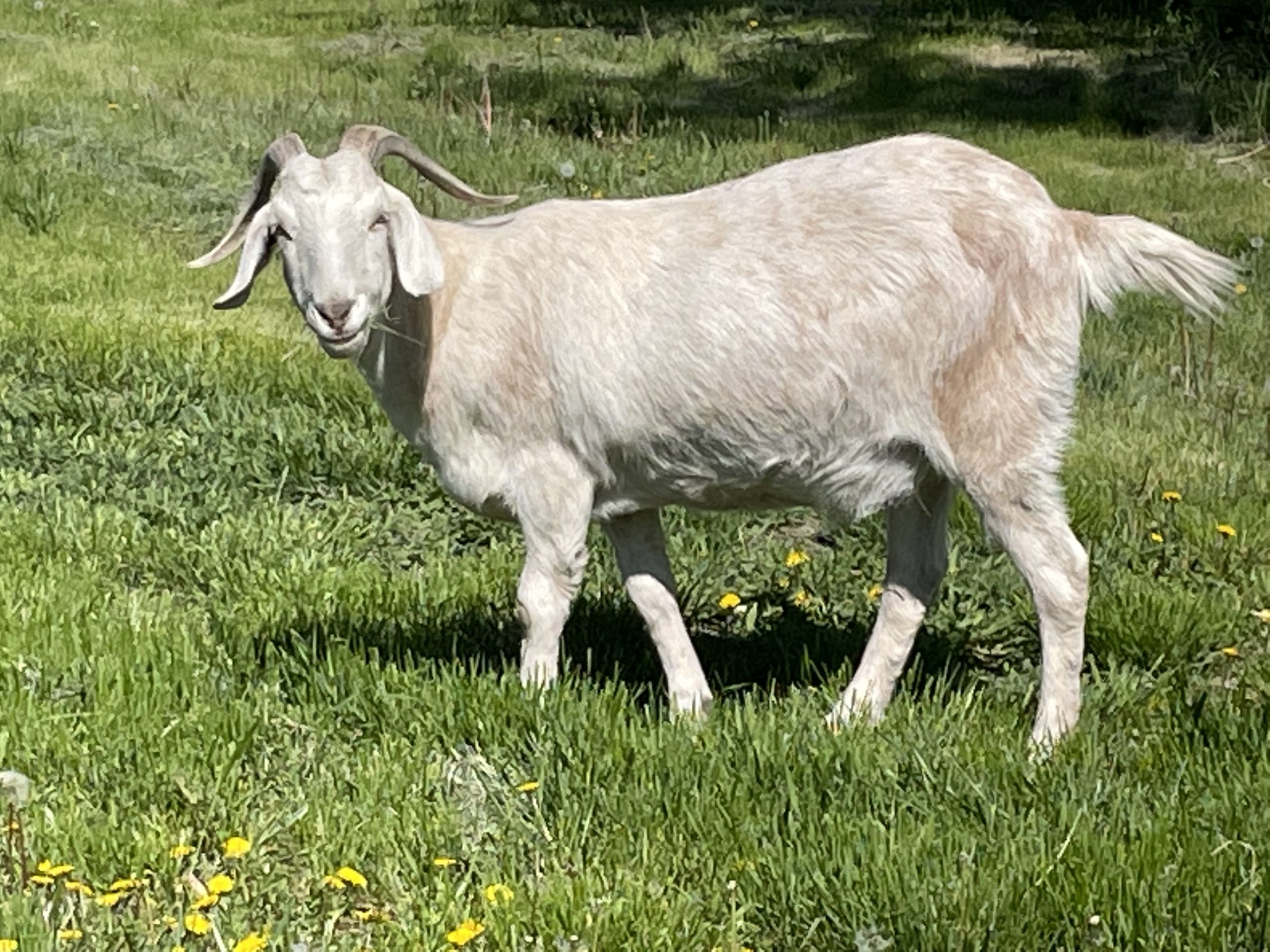
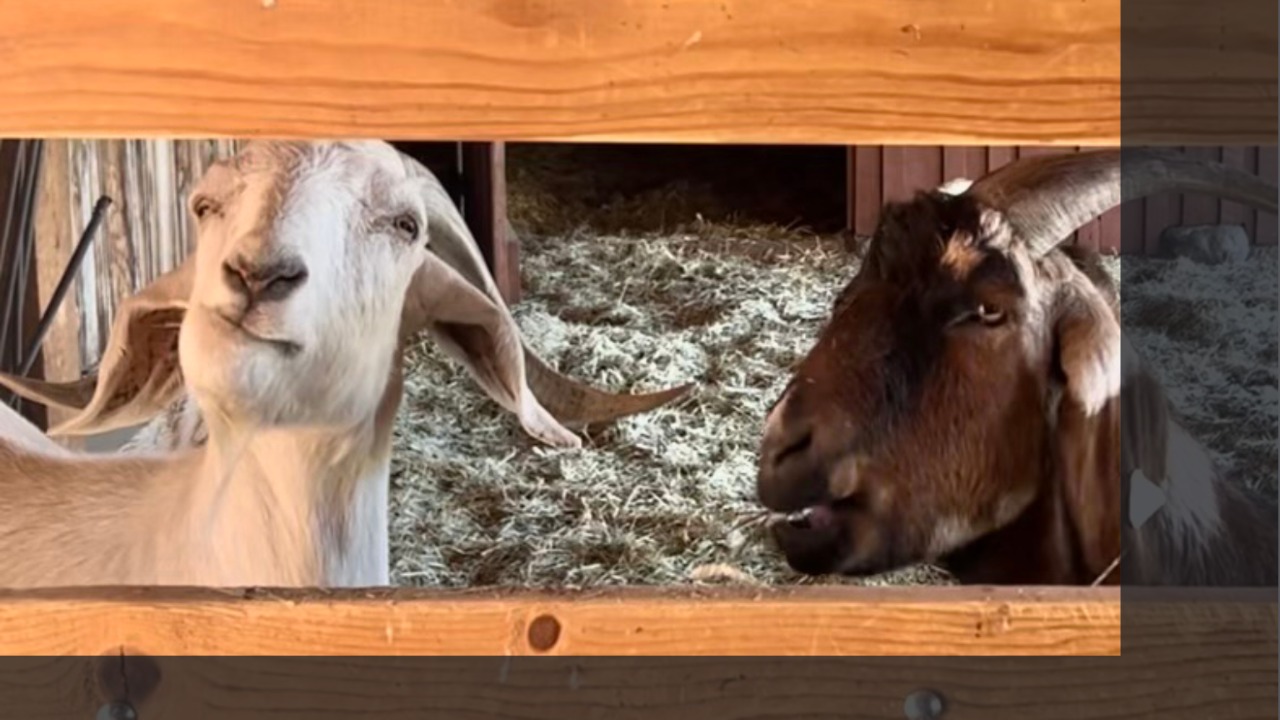
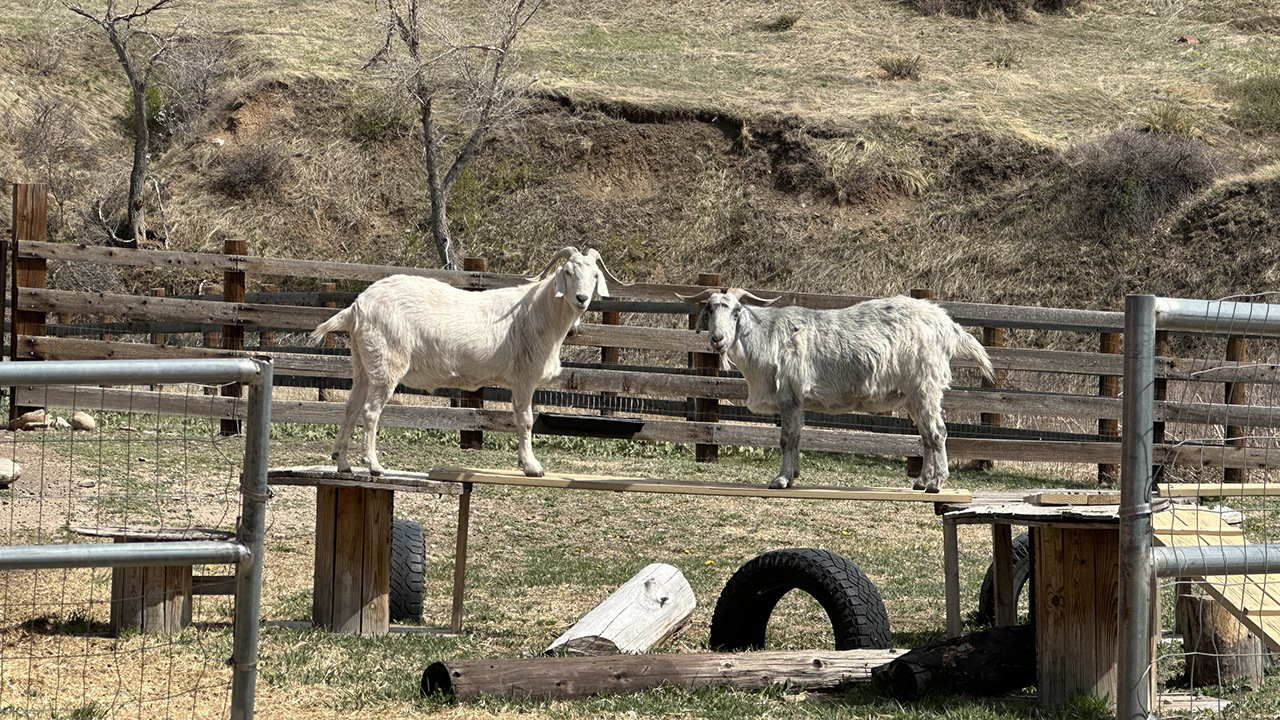
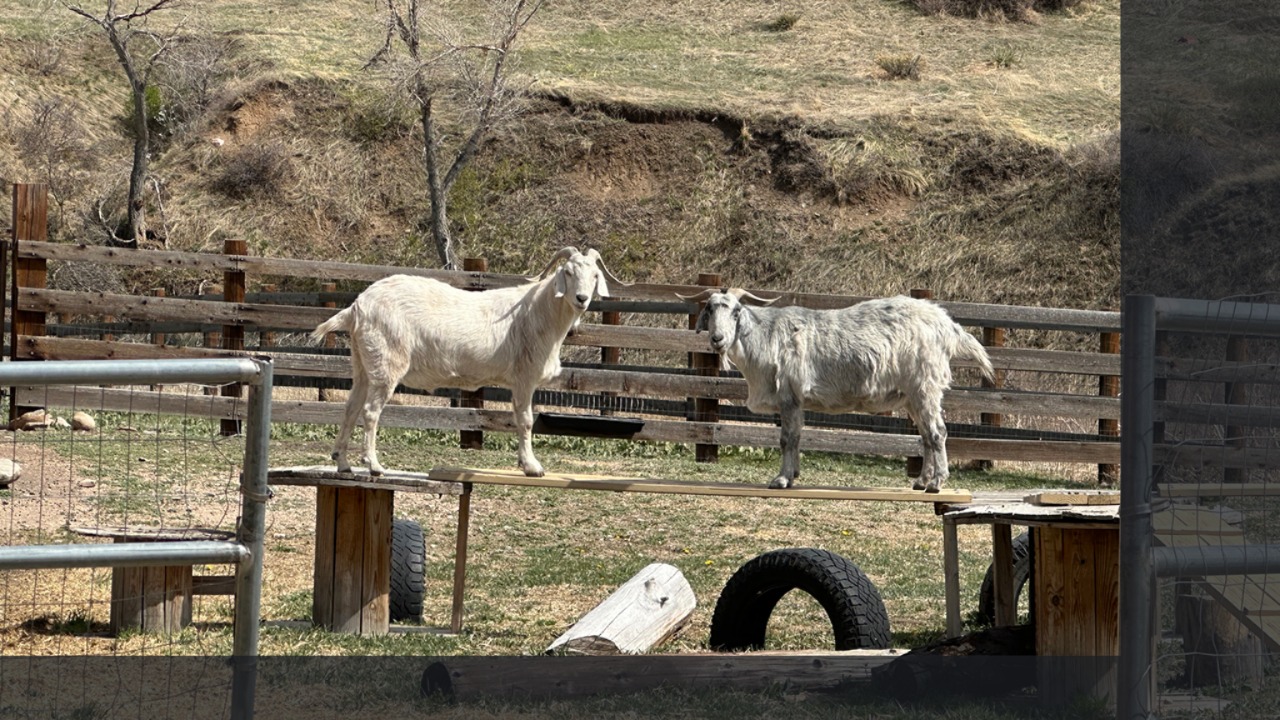
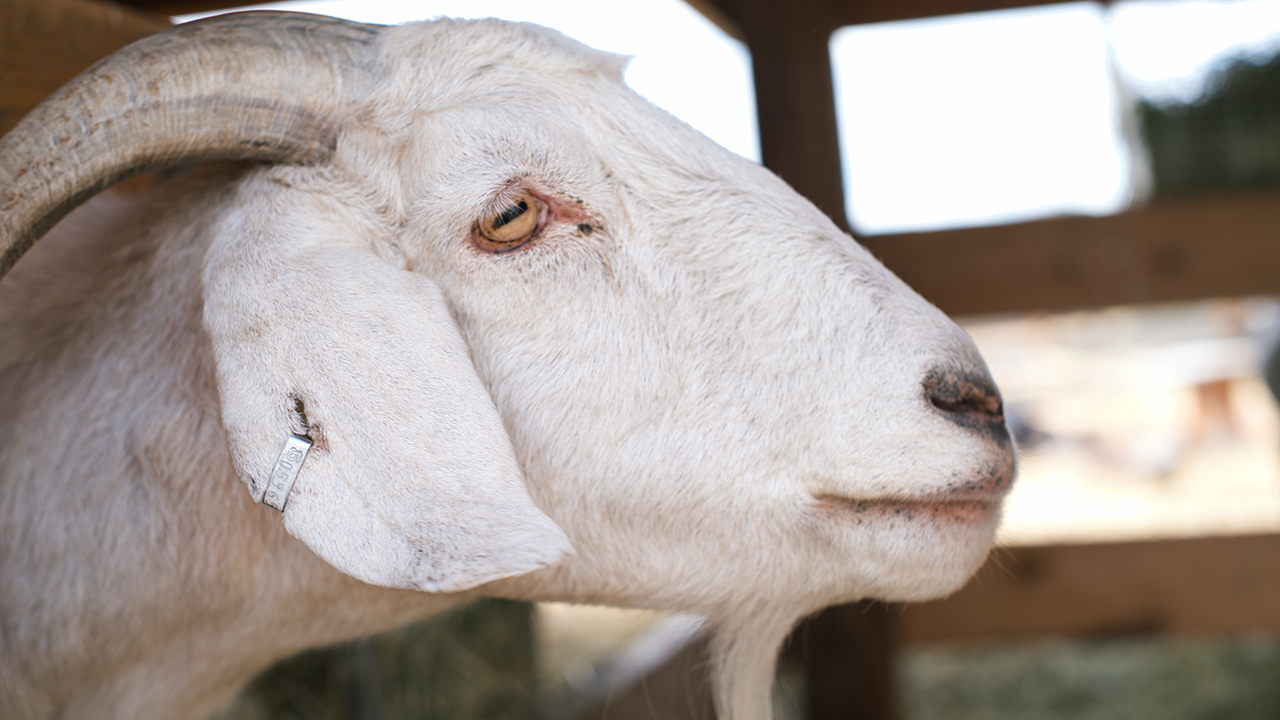
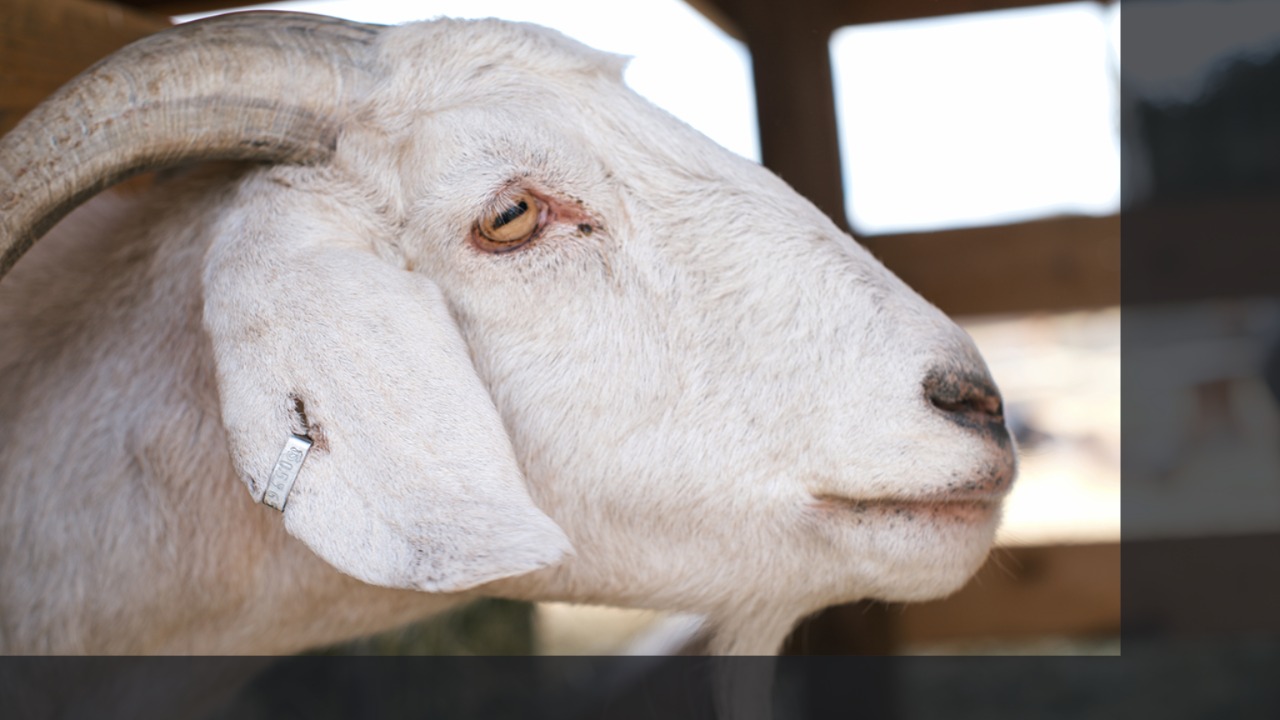
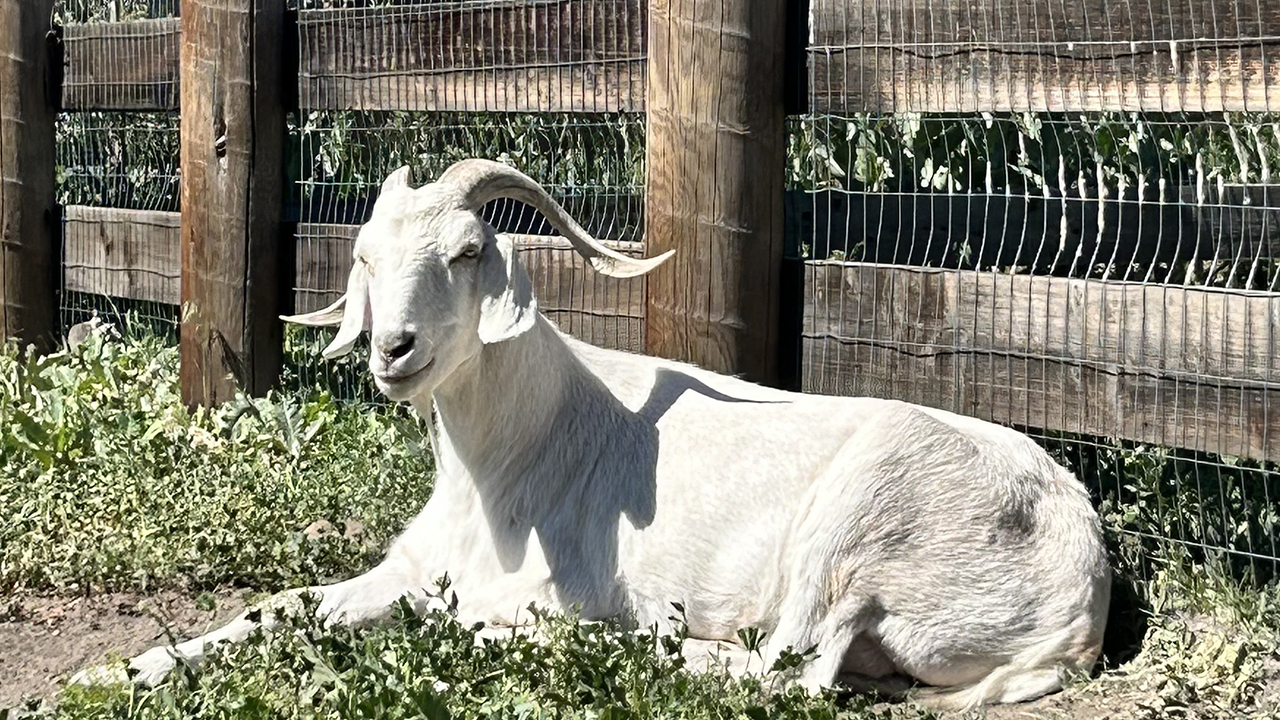
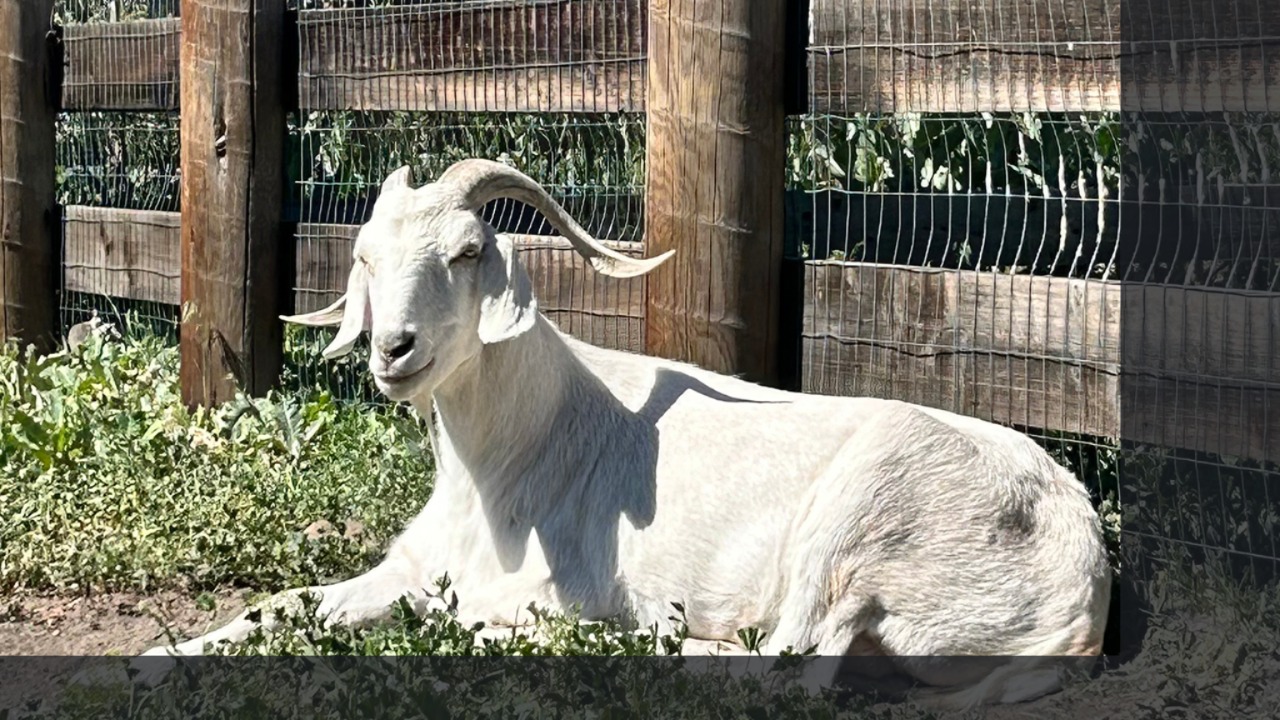
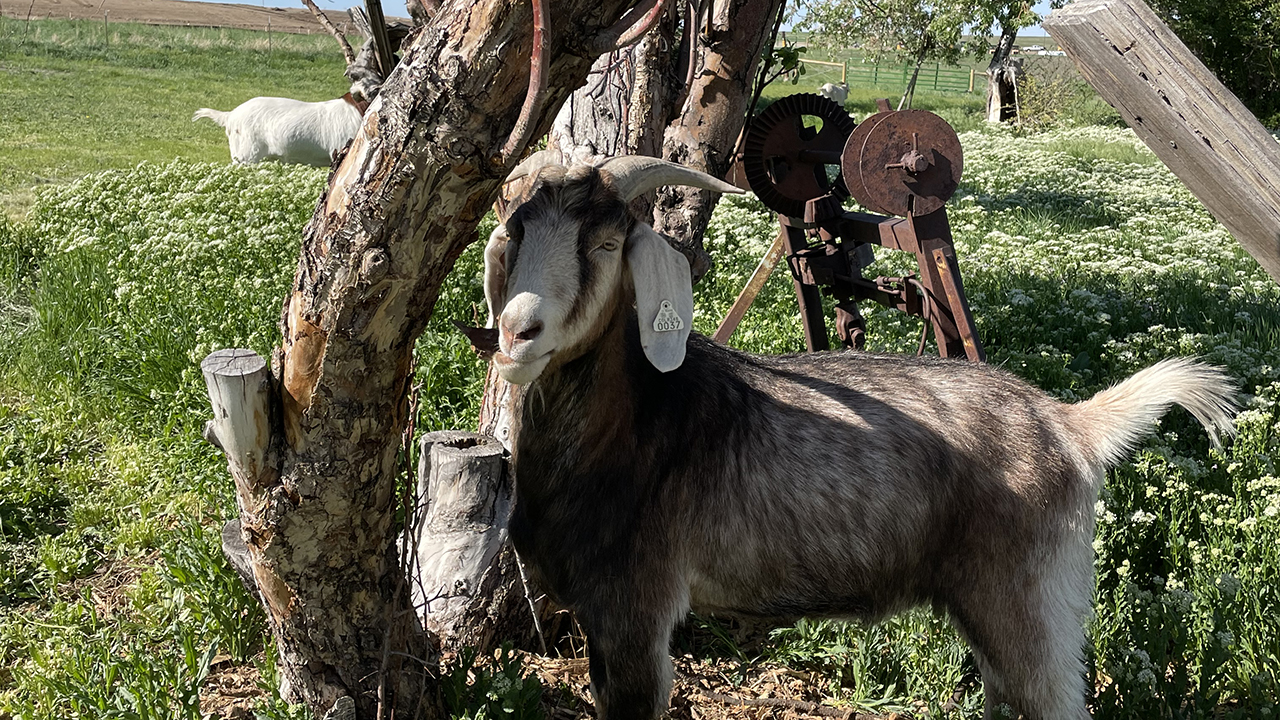
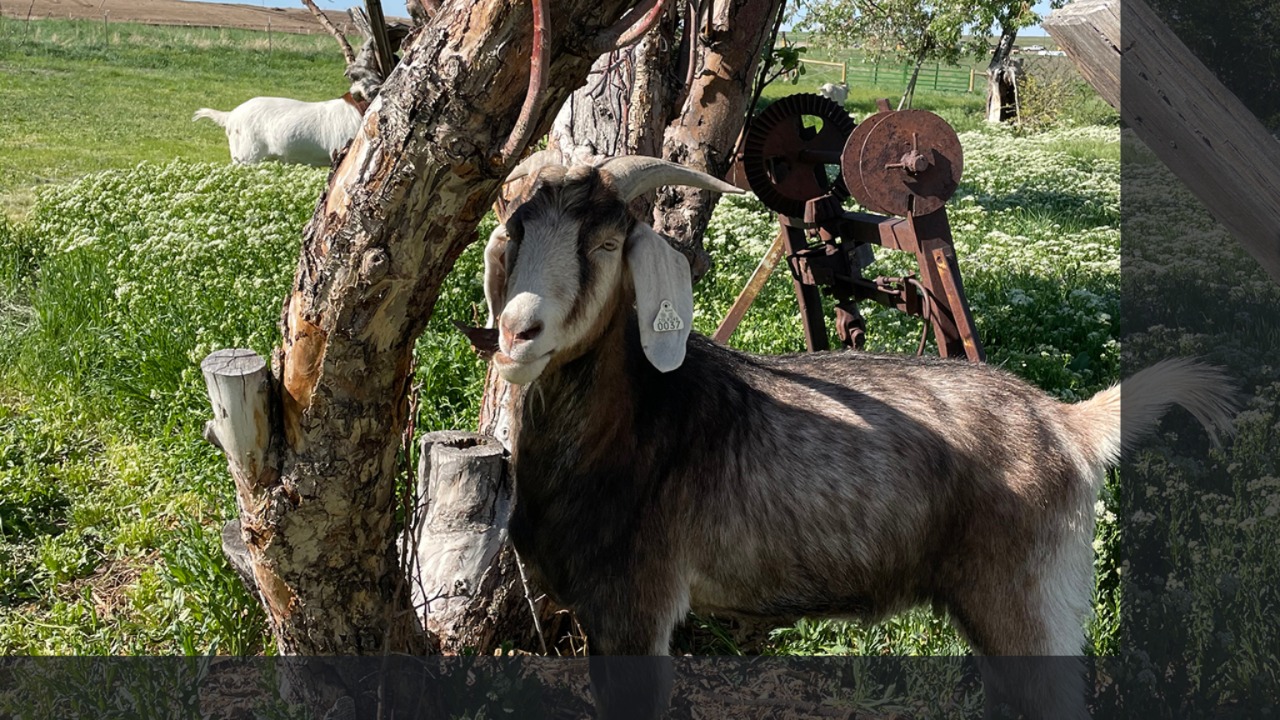
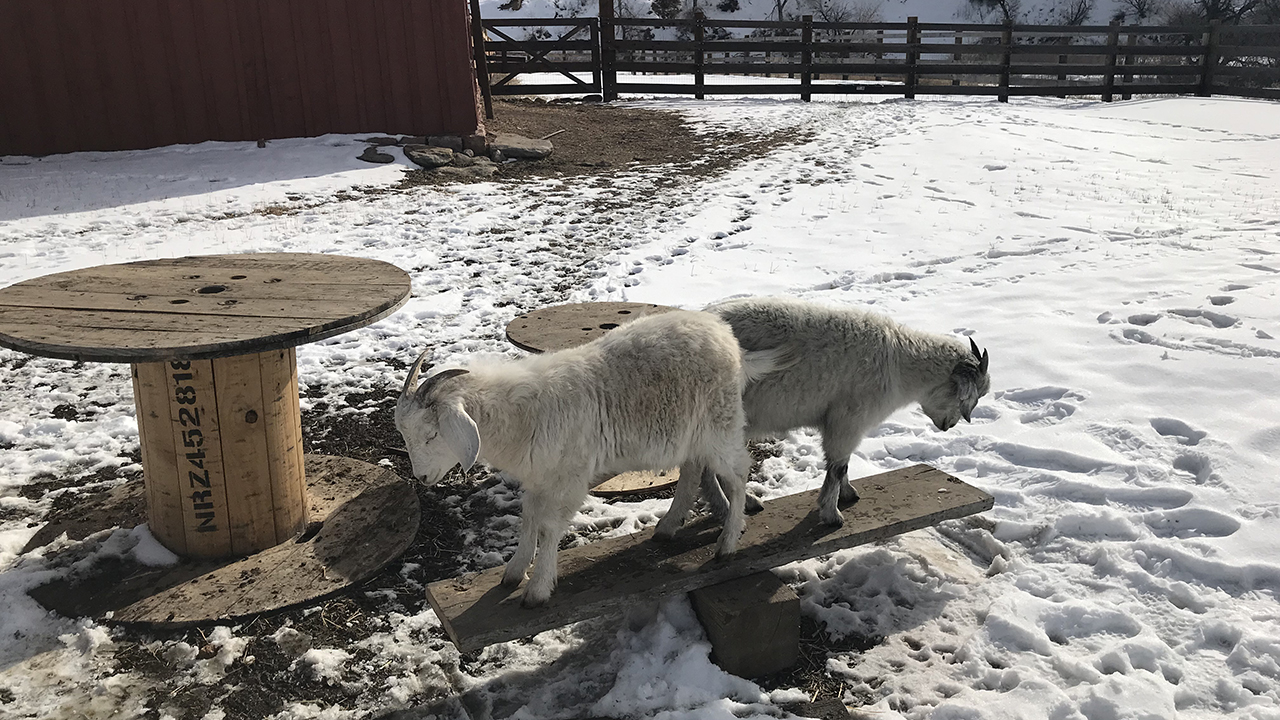
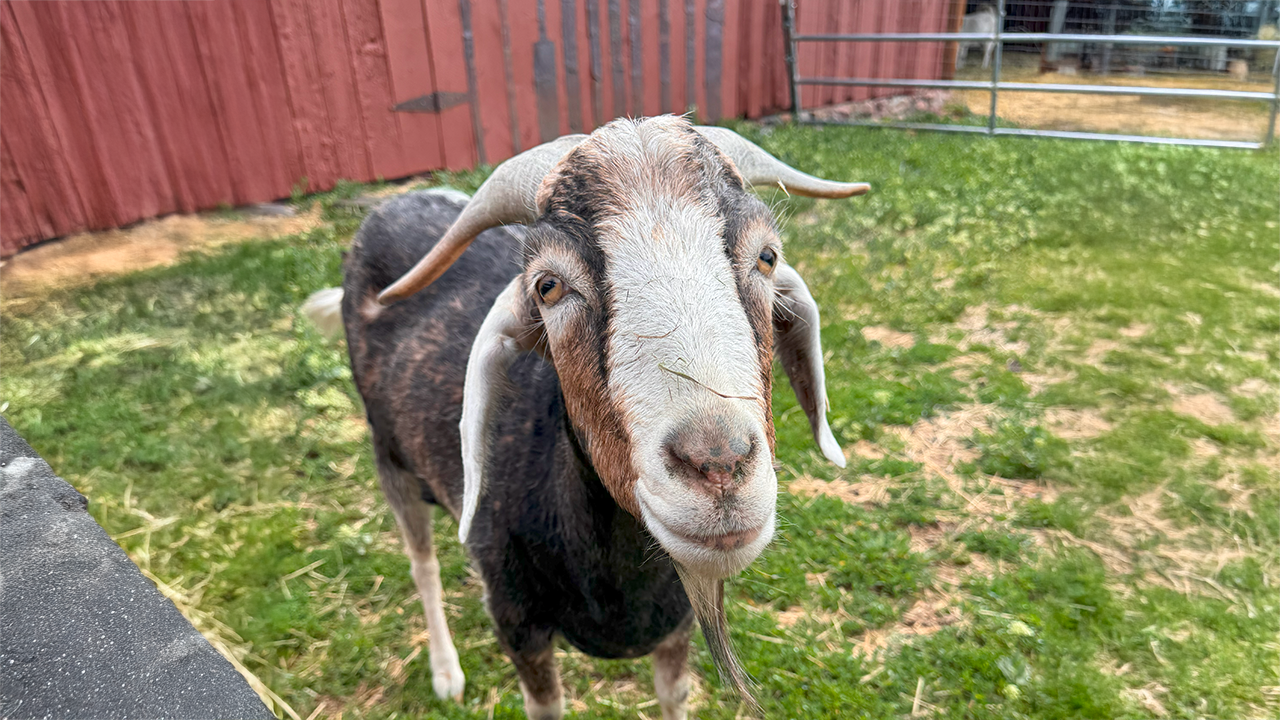
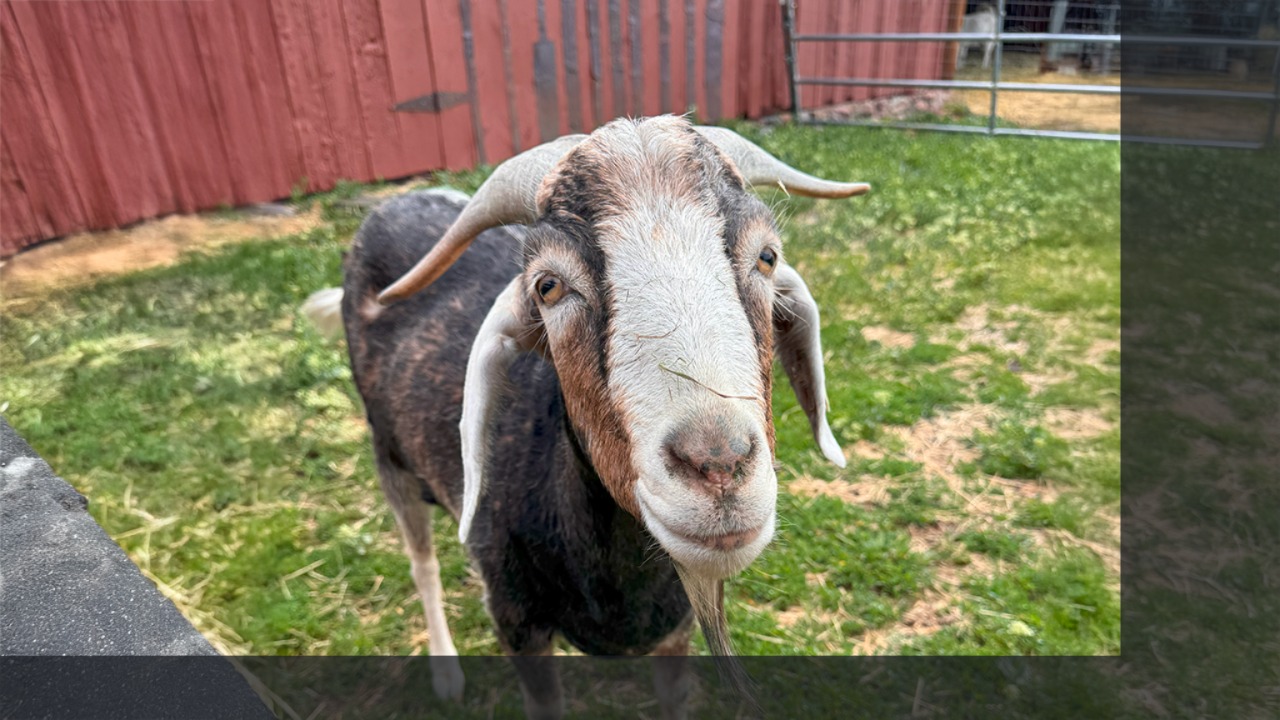
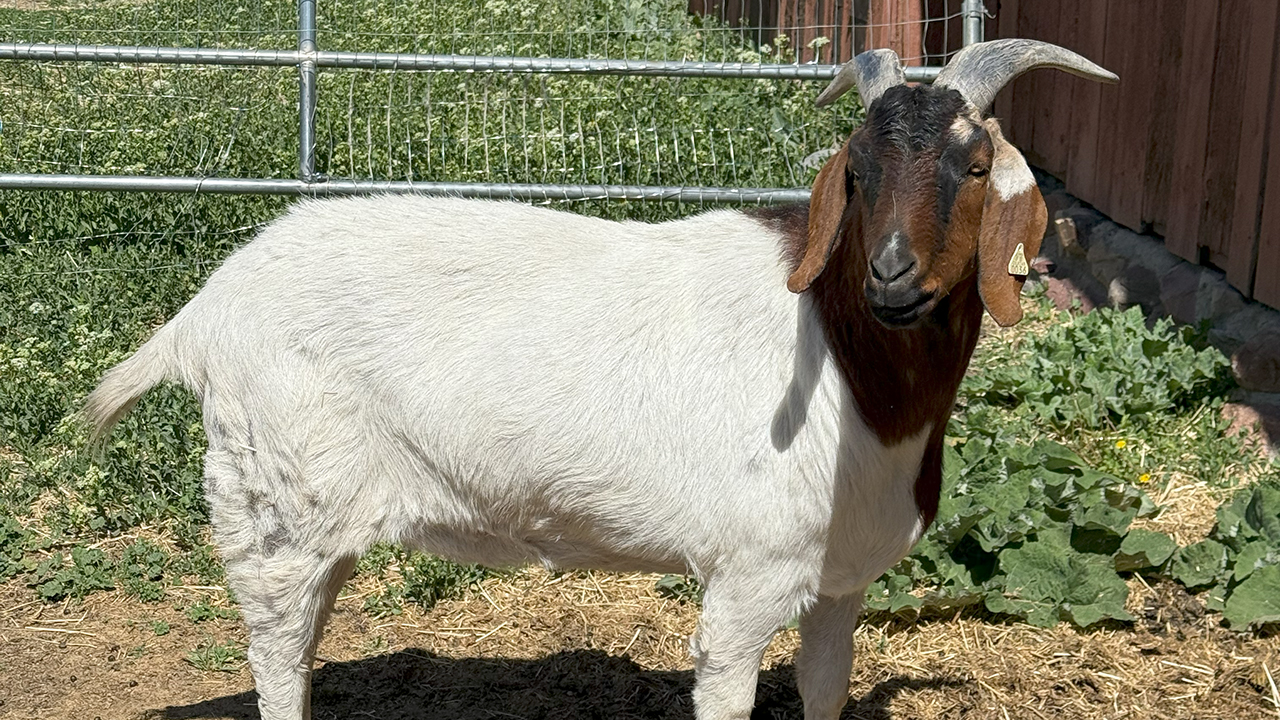
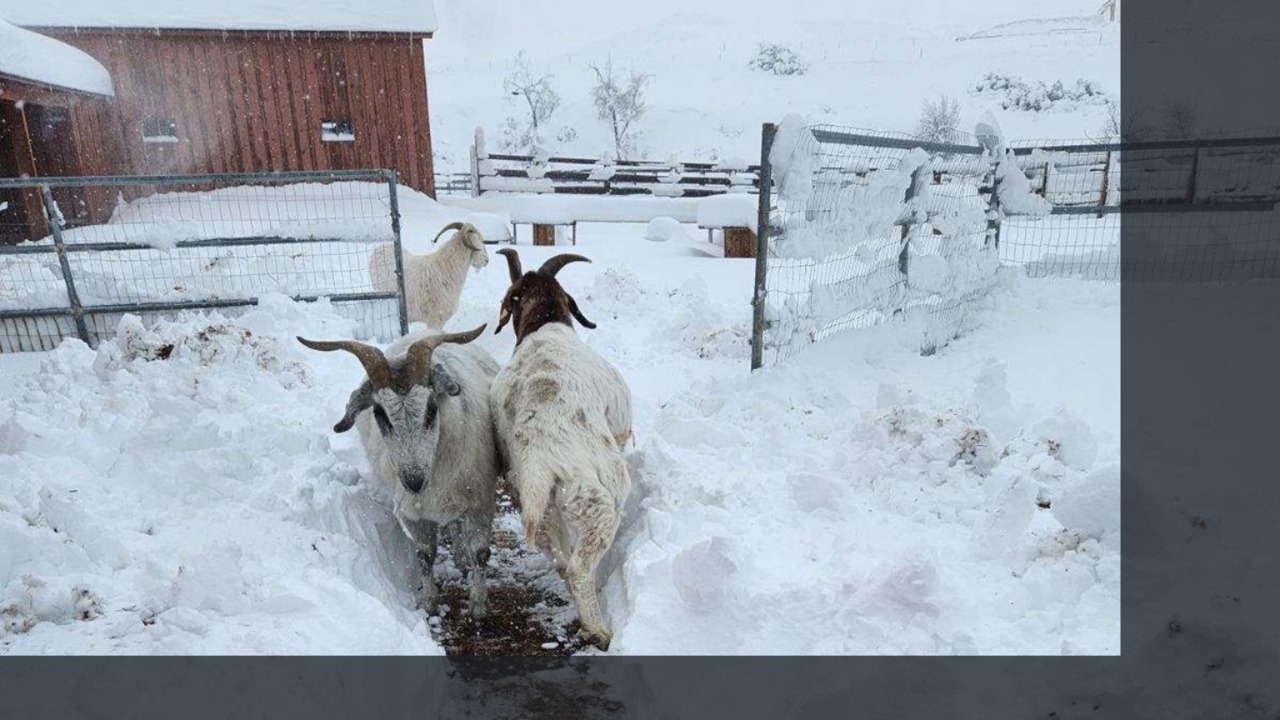
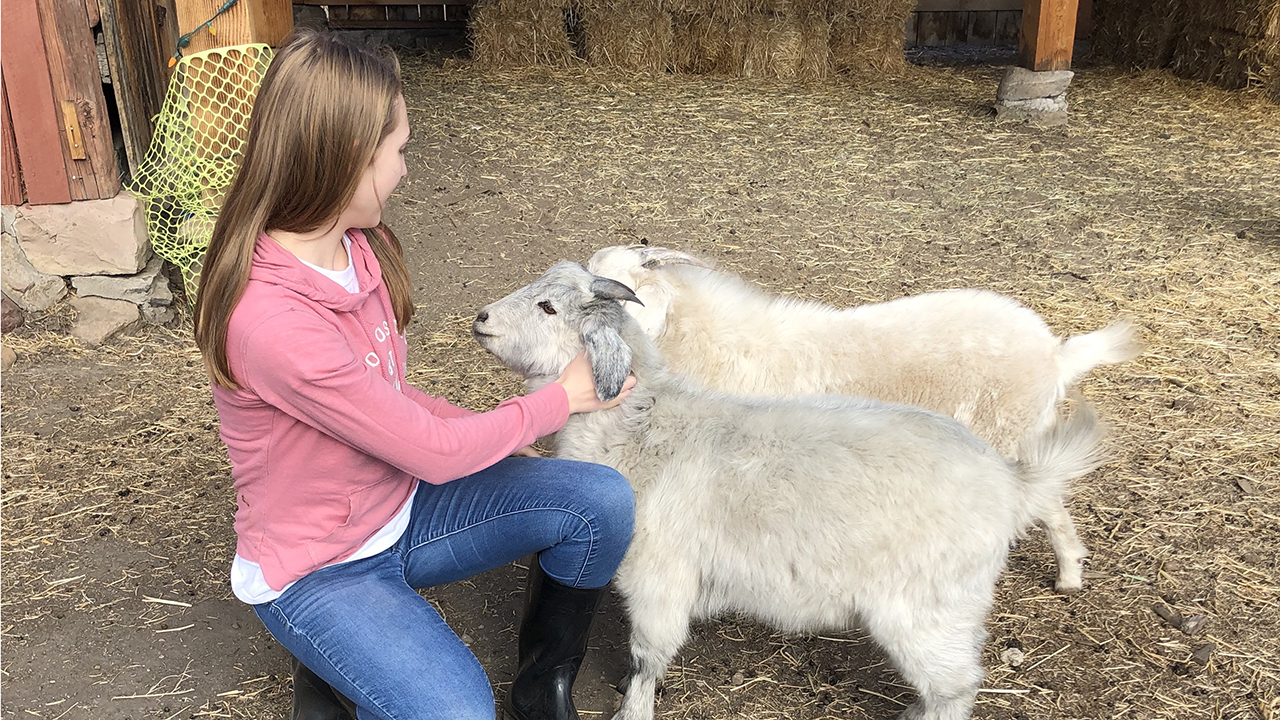
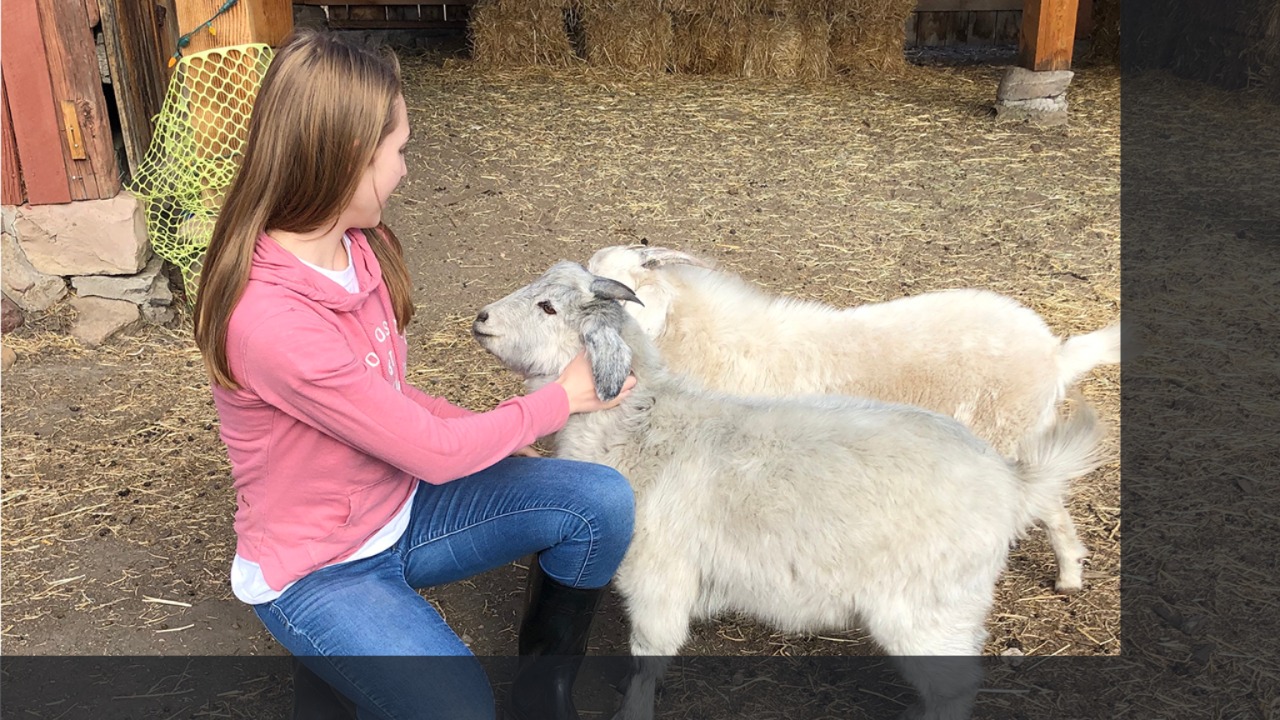
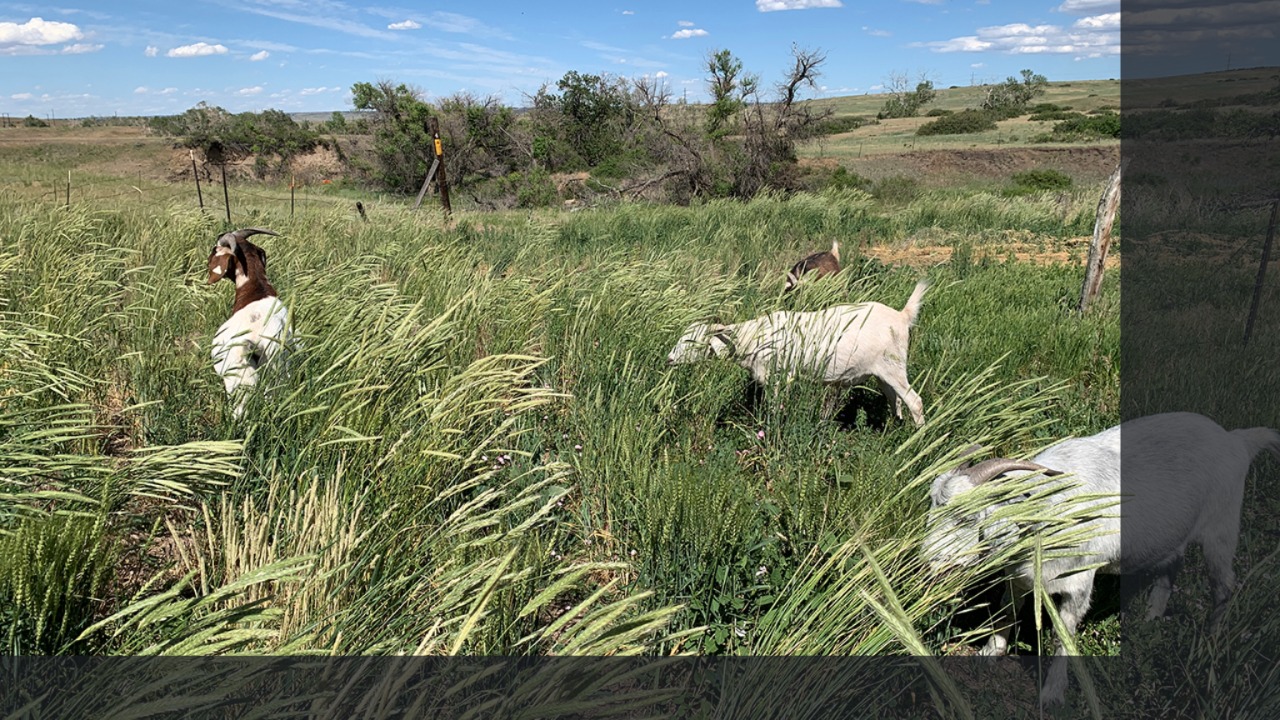
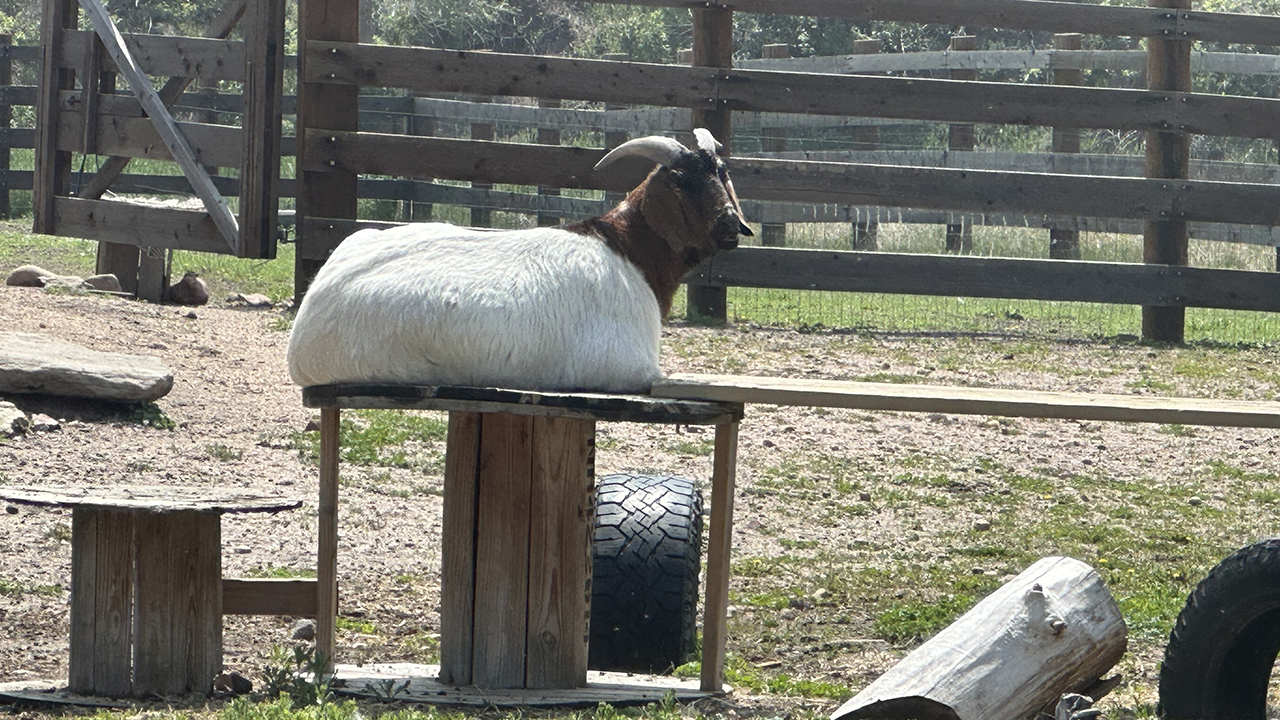
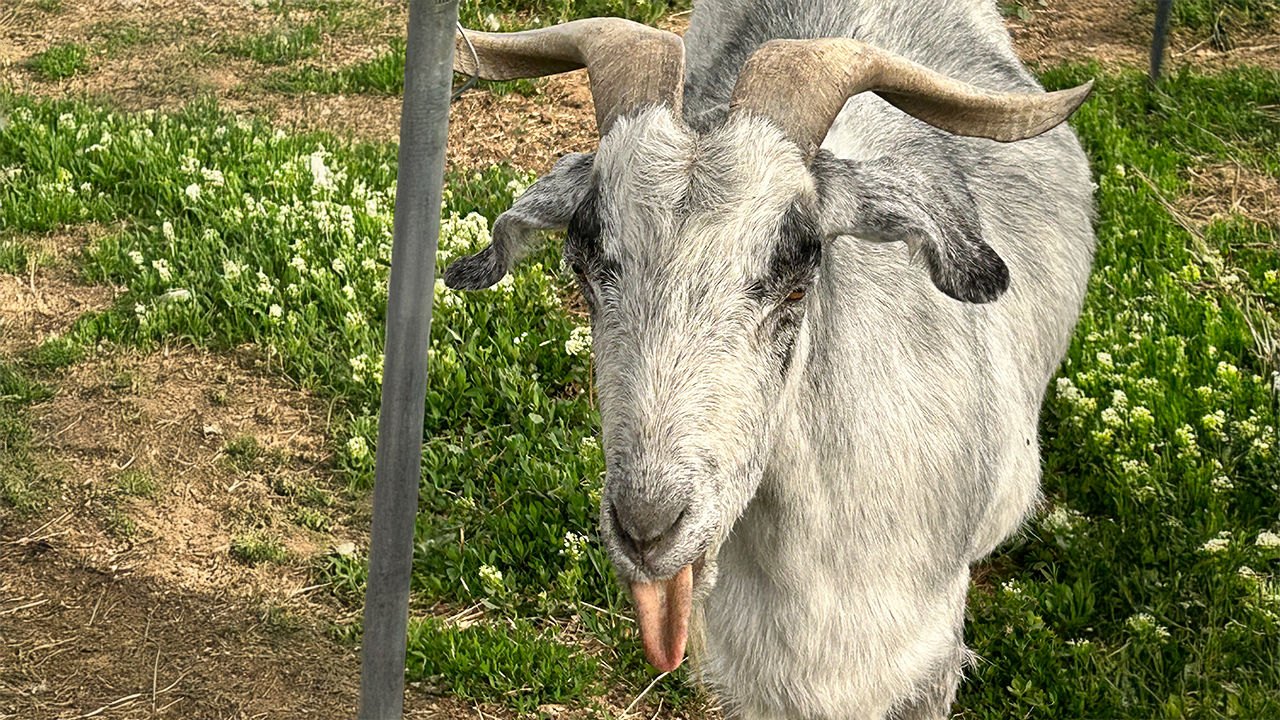
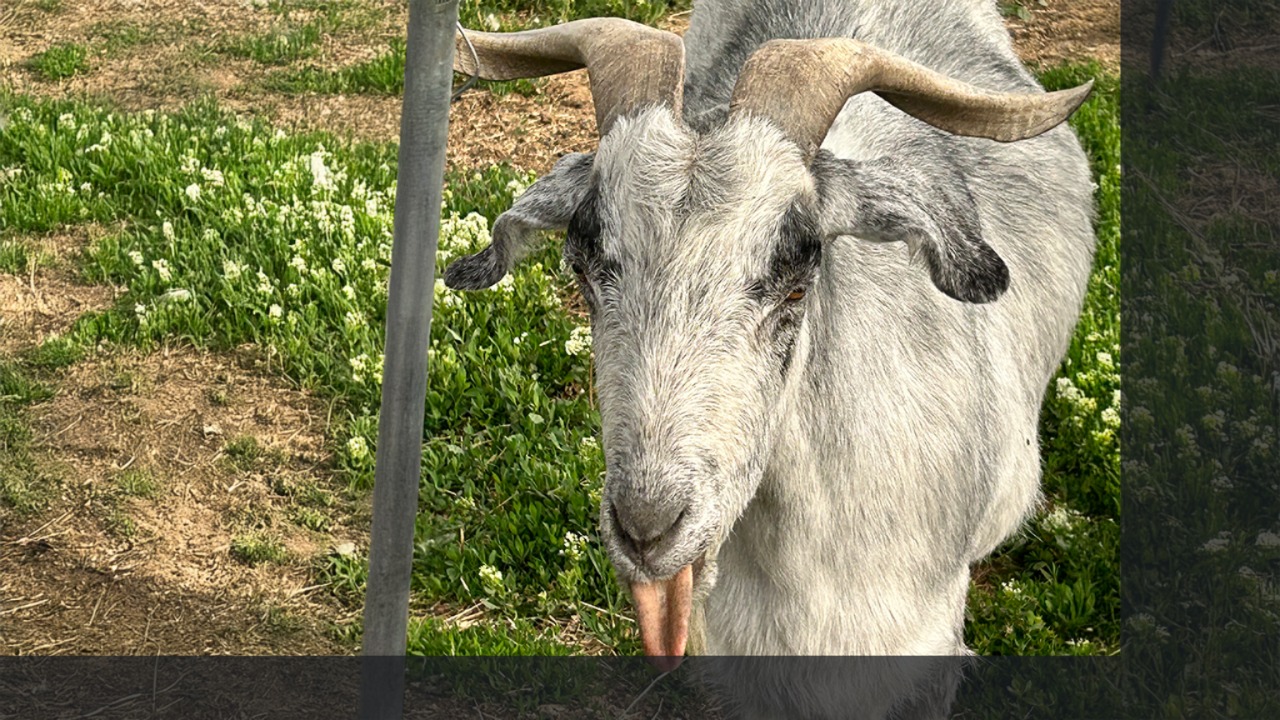
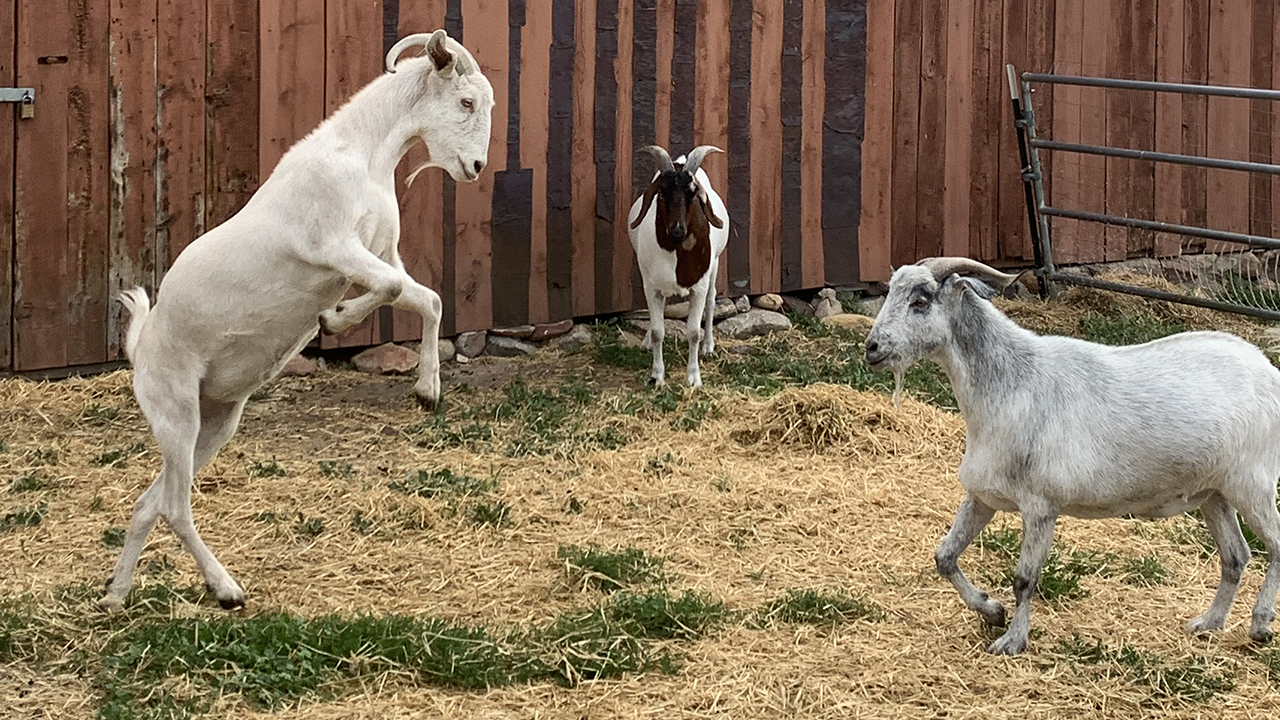
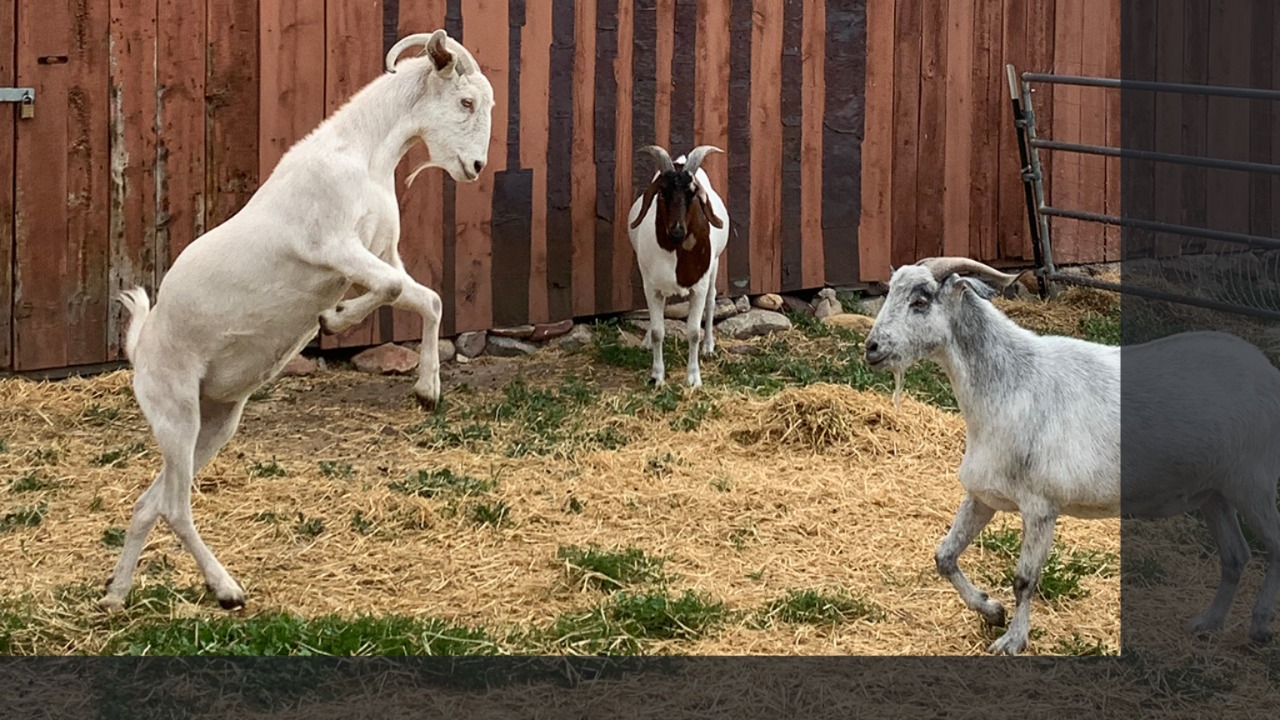
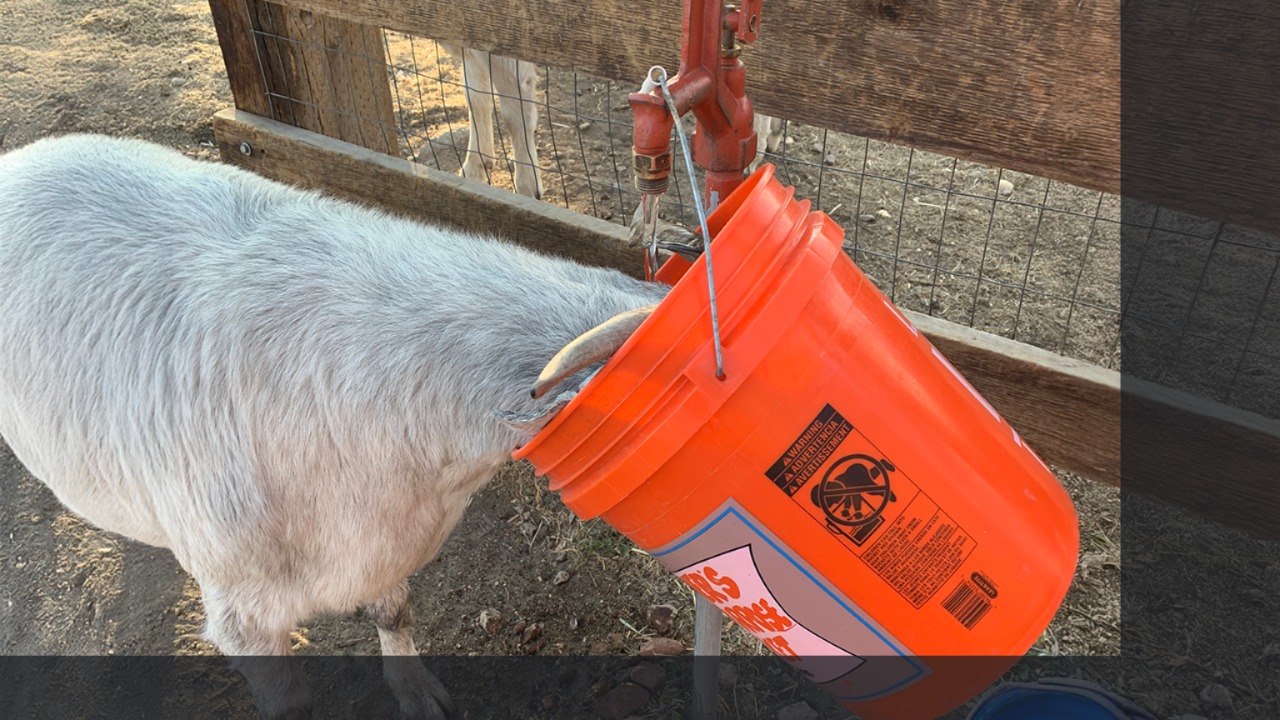
The Schweiger goats are from two different breeds: Spanish and Boer. Bumble and Gandalf are a Spanish mix breed; Puck and Snoopy are a Boer mix breed. Each goat is named after a literary character from a book or movie. Can you guess which ones?
Learn More
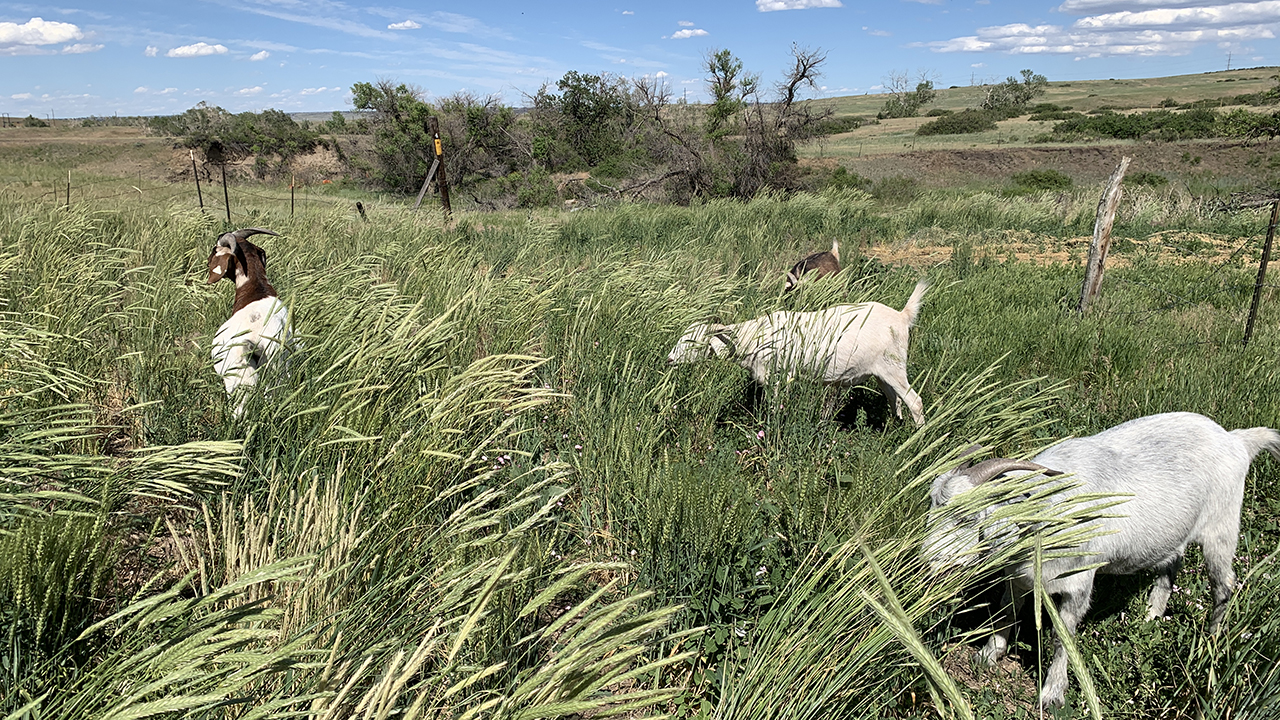
The goats were purchased in 2018 from a 4H family in northern Colorado. At the time of purchase the goats were four months old and small enough to fit all together inside a large dog crate for transportation. Now they have grown to 200+ pounds, and each eat roughly 3 pounds of grass per day, along with natural grazing.
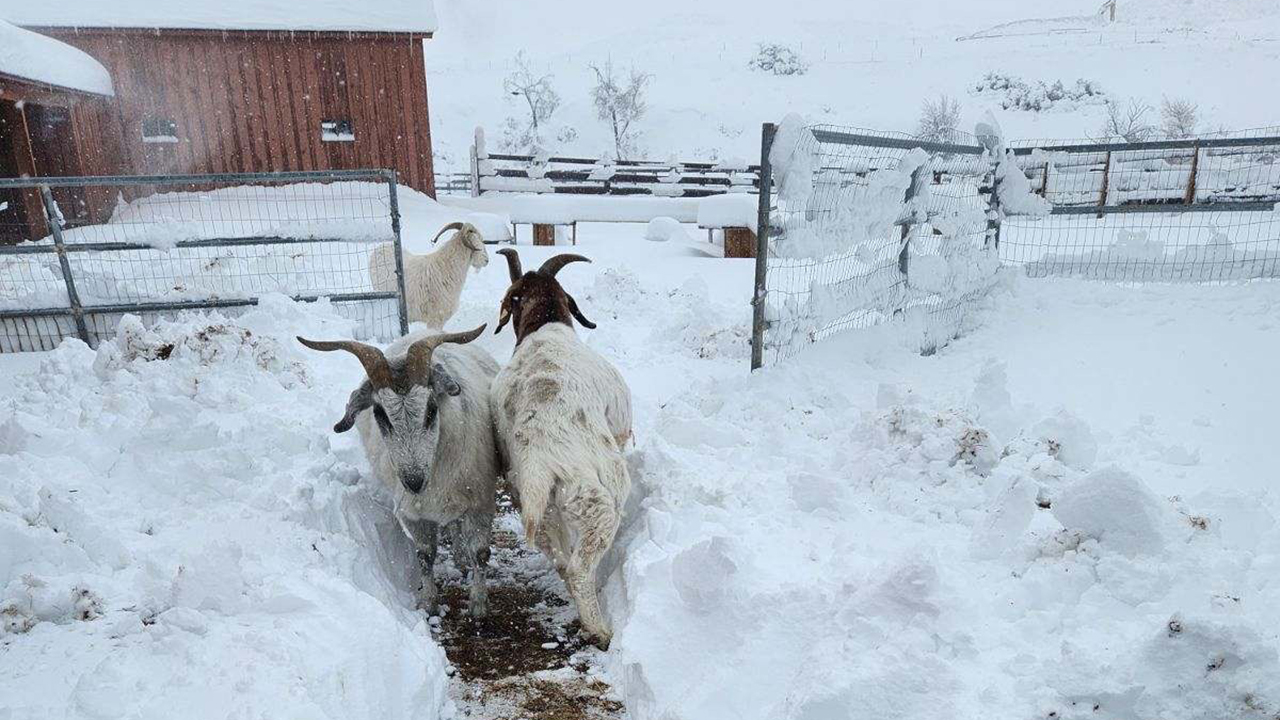
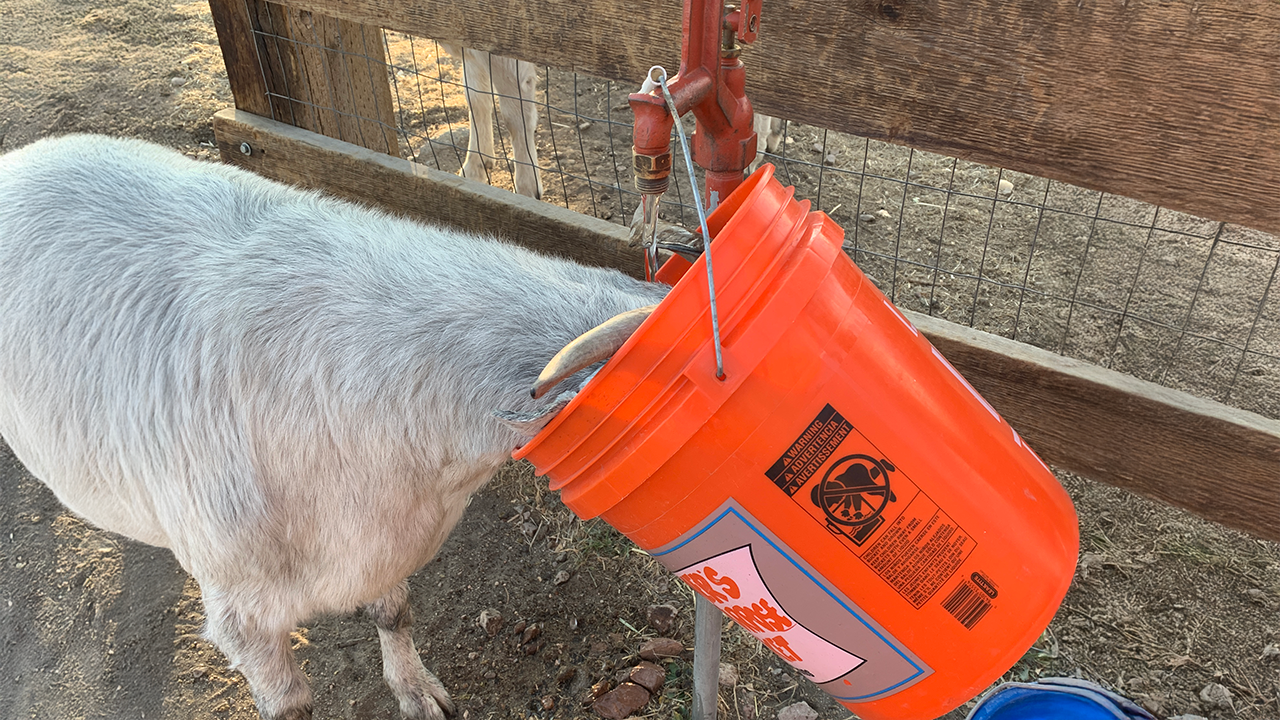
Interesting goat facts: An average life span of a goat is 7-14 years; although we hope our ornery boys will be around for a long time! A common myth is that goats can eat anything. While some goats are bred for landscape mitigation, the Schweiger goats are very picky about what they eat and have sensitive stomachs, limiting their feed options to Timothy grass and natural grasses found on the Ranch when grazing. Similar to cows, goats have a four-chambered stomach to help them digest tough roughage. Our goats do not like to get wet. During storms and cold weather, you can find them sheltering under the historic loafing shed or in an enclosed room attached to the barn to stay dry and warm. They also are very particular about the temperature of their water and won’t drink water that is too cold. During the winter months, their water is slightly heated to keep it at a comfortable temperature and avoid freezing.
Bumble
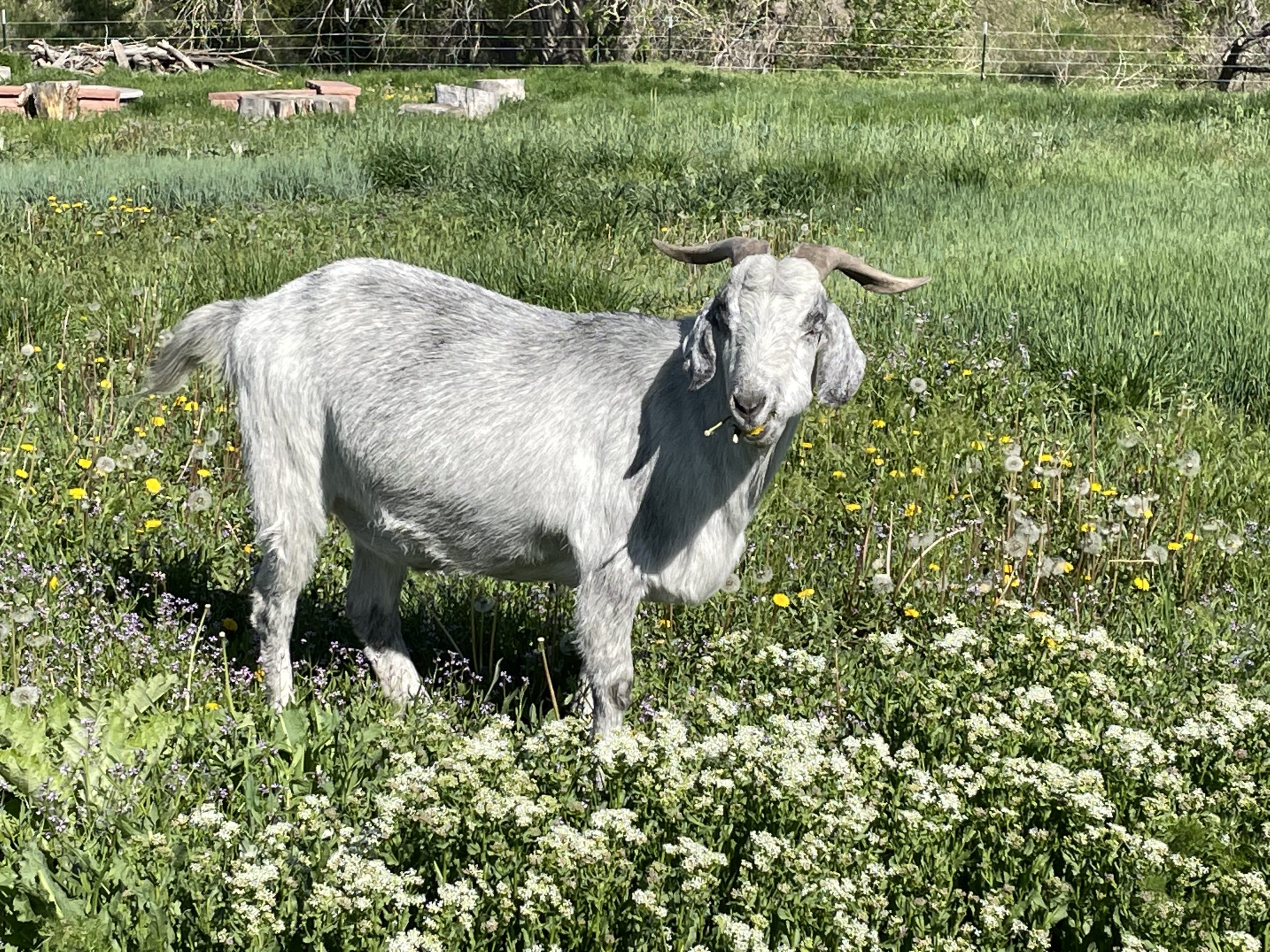
Gandalf the Grey
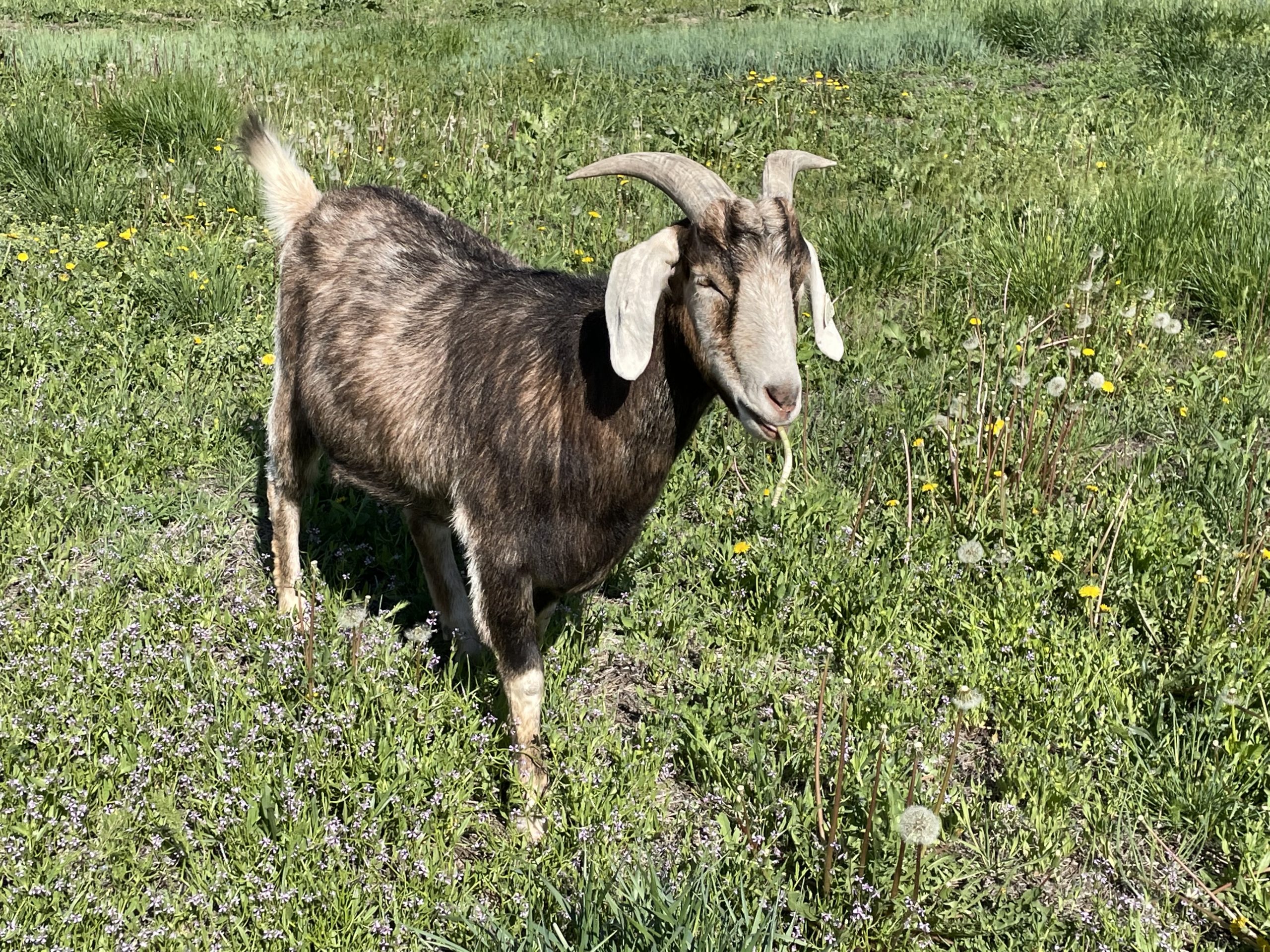
Puck
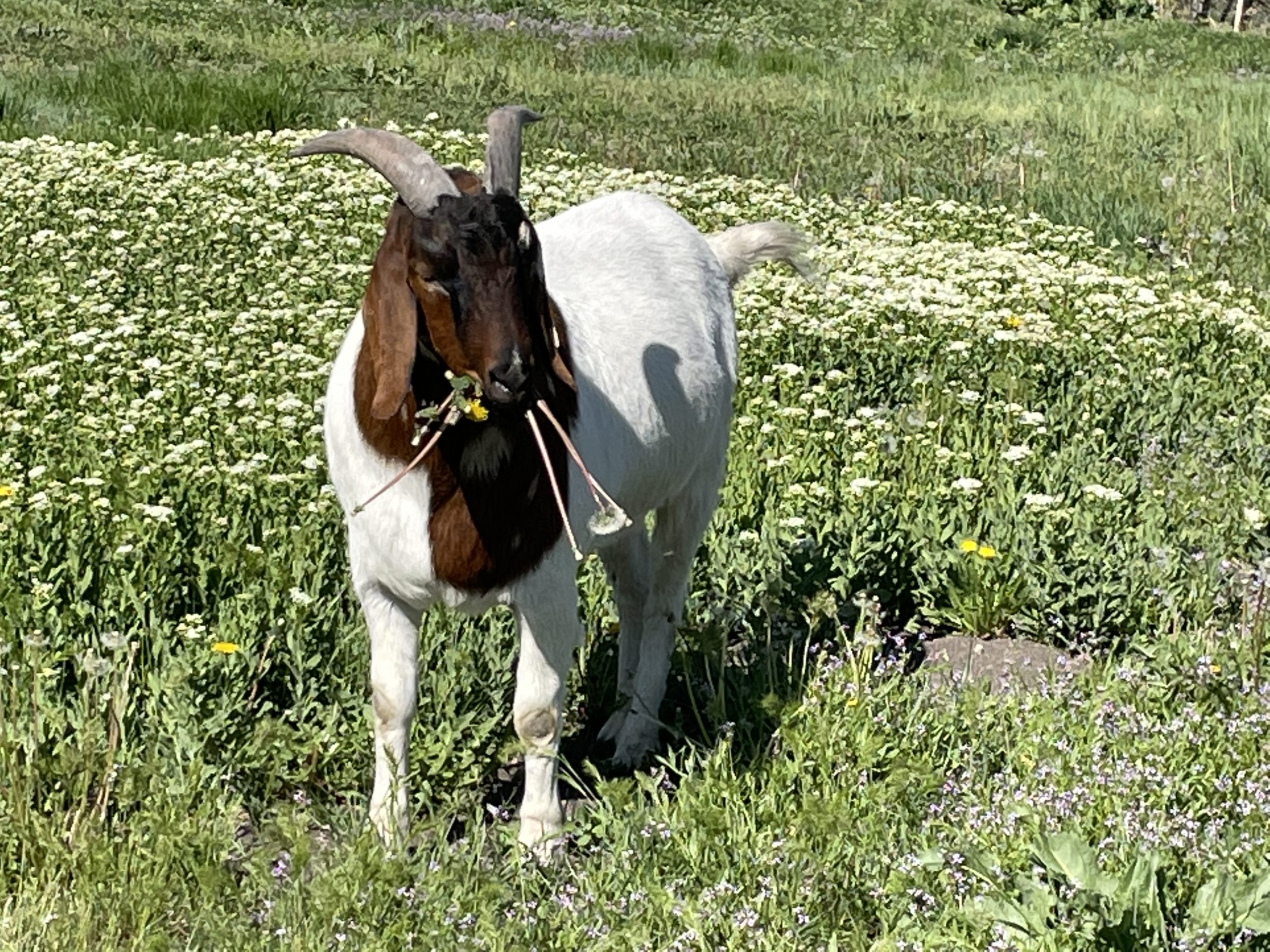
Snoopy
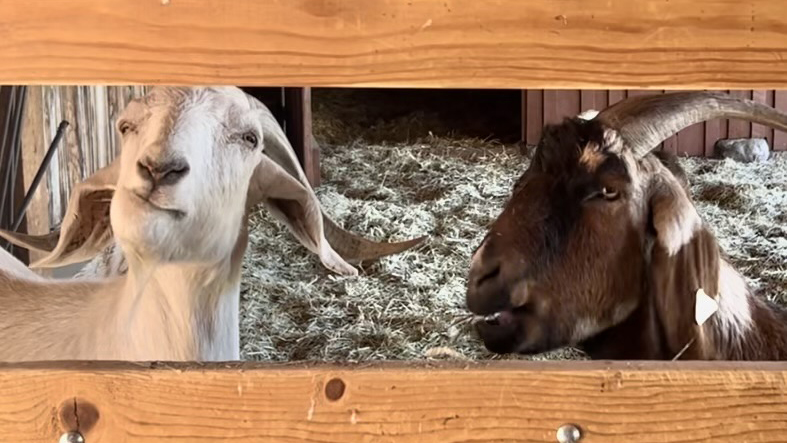
Goat Gallery
CHICKENS
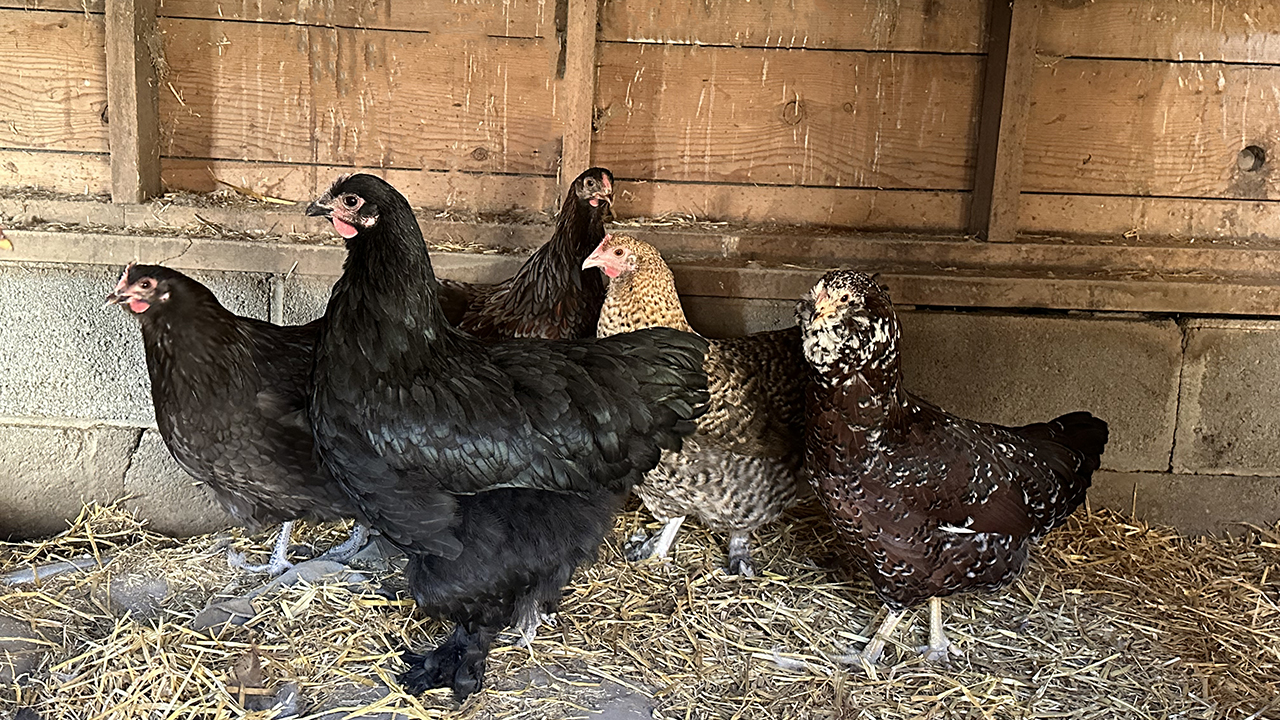
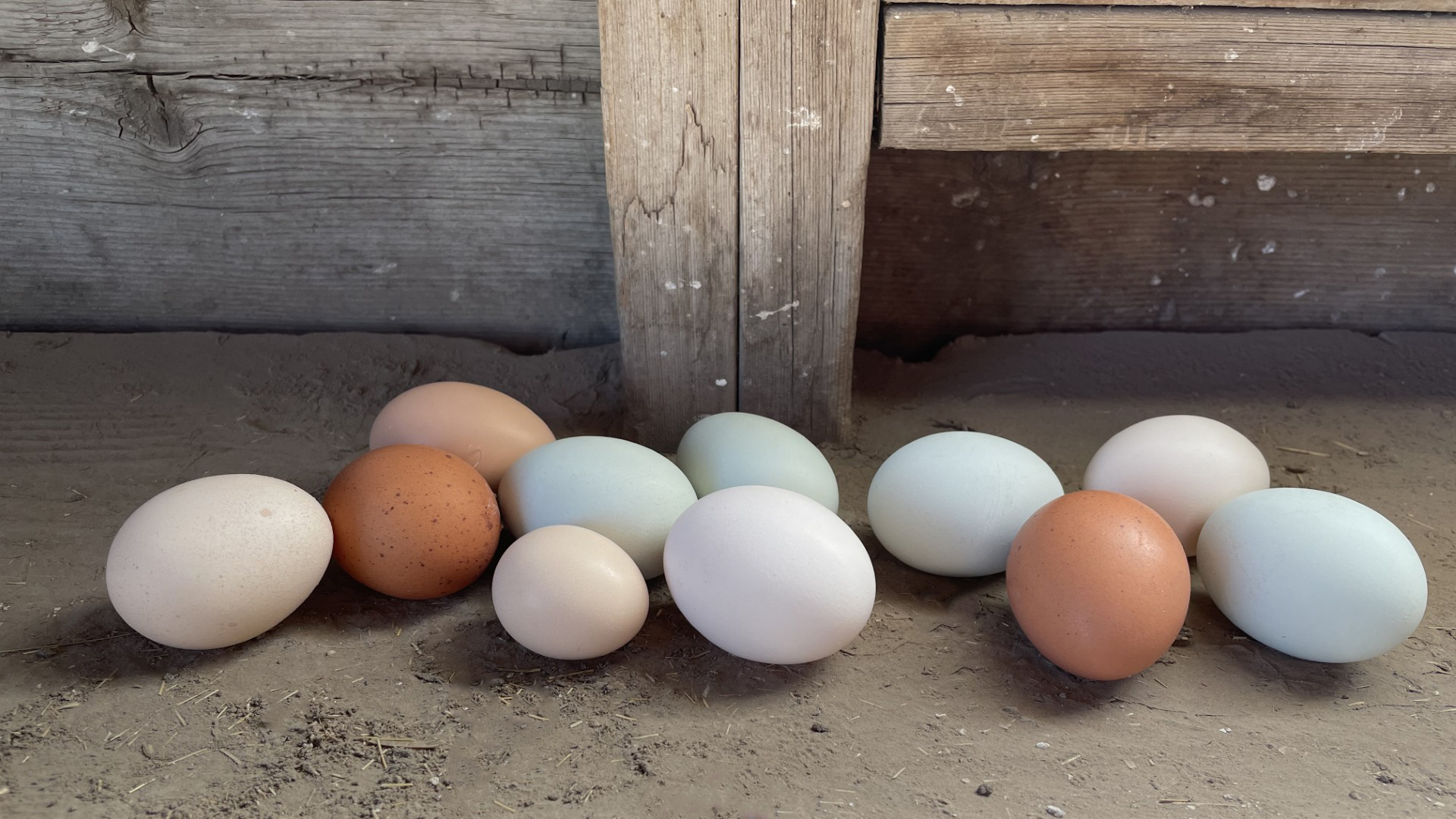
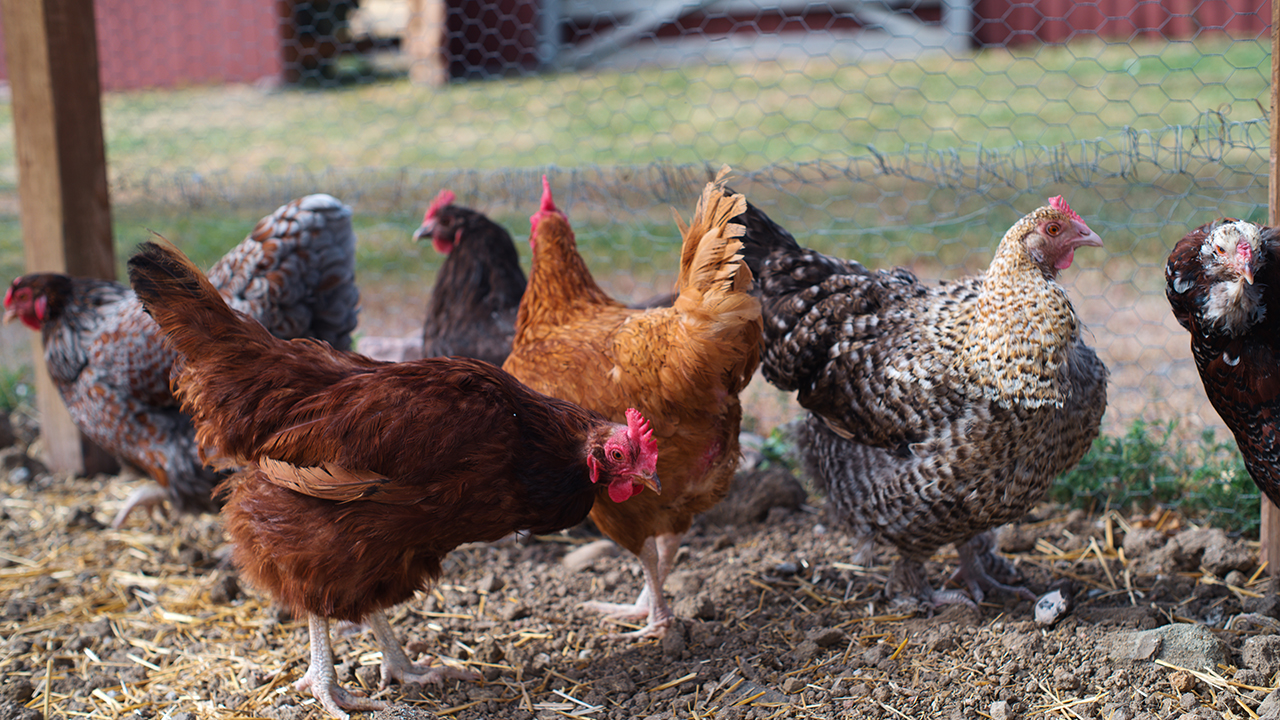
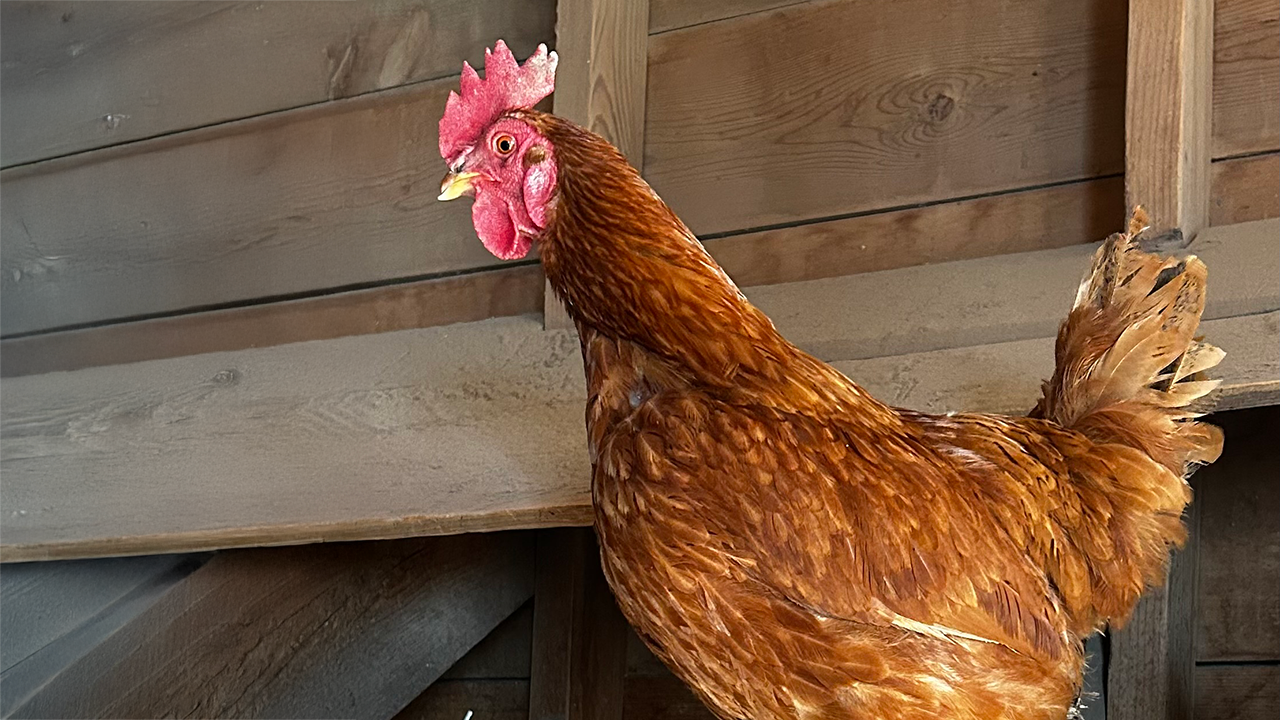
Schweiger Ranch hens are a variety of different breeds, each laying approximately 150-300 eggs a year in colors ranging from white, brown, to green. During the Fall, the hens will molt their feathers in preparation to grow new winter feathers to keep them warm during the cold months. During this time, they will temporarily stop laying eggs while their bodies expend needed energy to regrow their feathers.
Learn More
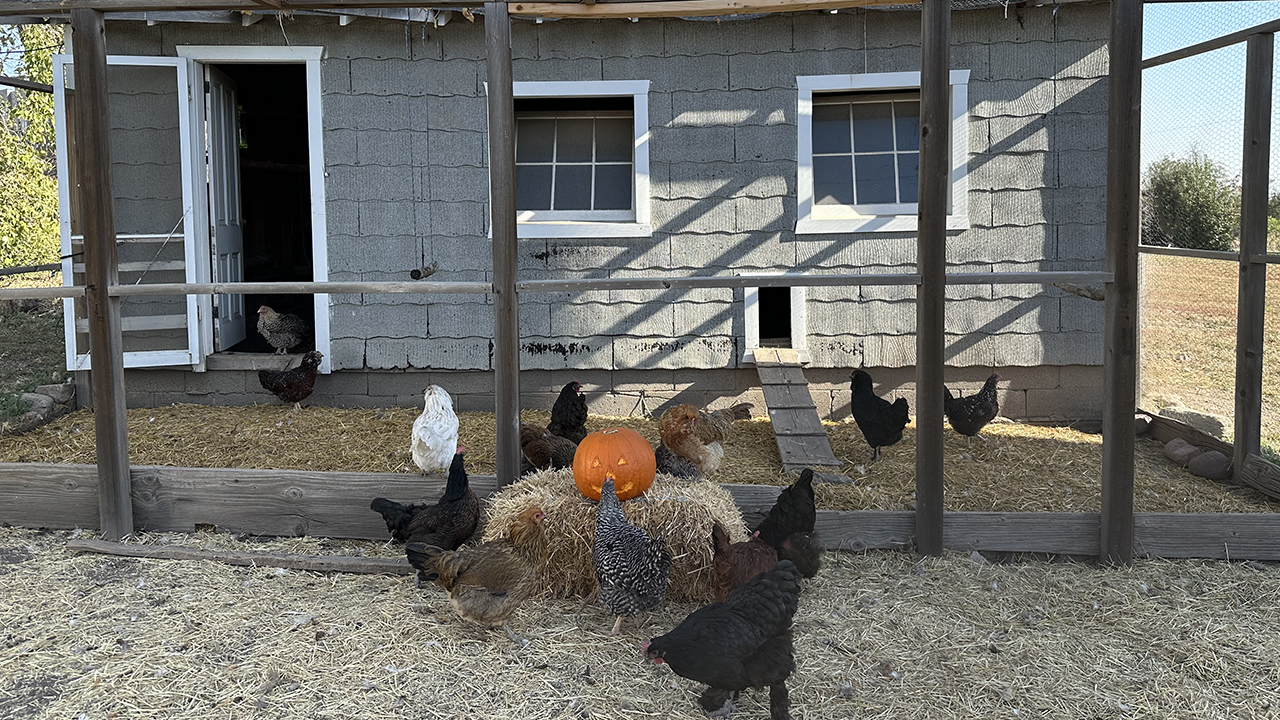
A typical life span of a chicken is 5-10 years, however as our beloved feathery friends, we hope they will be with us for much longer. Our hens enjoy a safe and secure coop and outdoor run protecting them from predators, and stay nice and cozy during the winter months with coop heaters and heated water buckets. Their favorite treat is dried meal worms, fresh vegetables, and grasses from around the ranch.
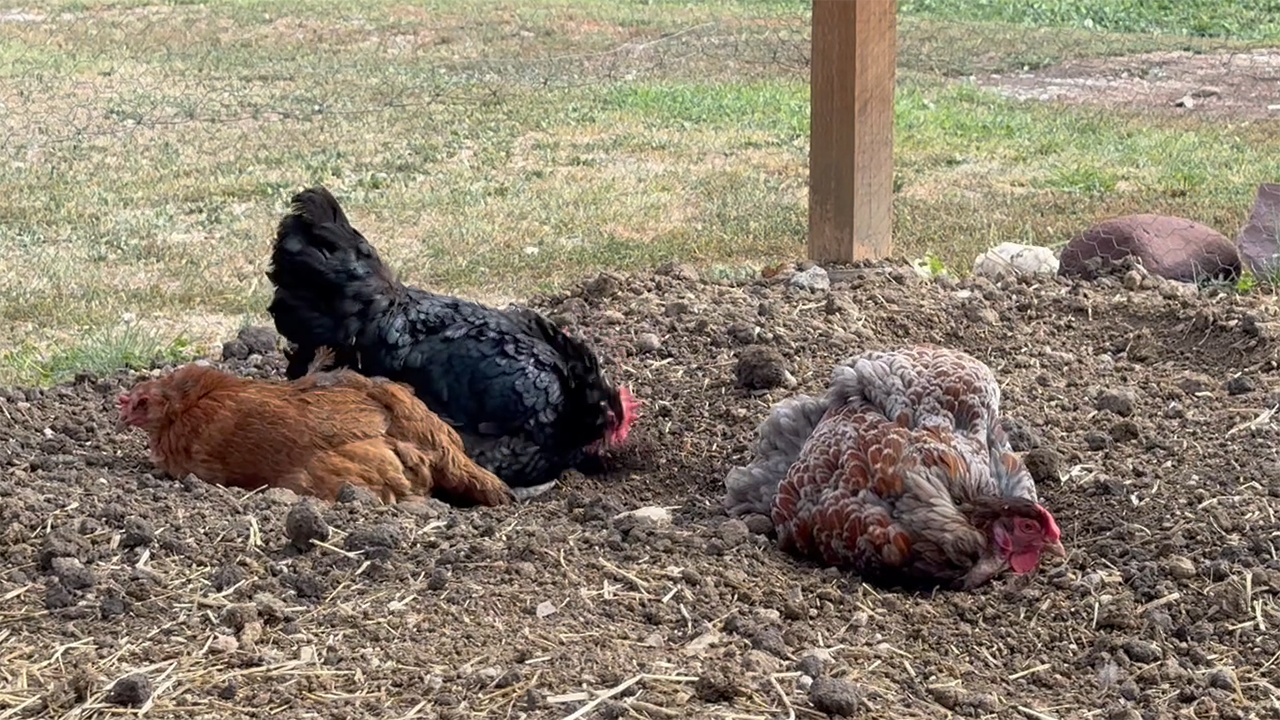
Thanks to a recent Eagle Scout project, our hens have an enlarged outdoor space to enjoy their dirt baths and sunshine. Did you know, chickens love to dig holes and coat their feathers with dirt. This is their way of keeping themselves clean. You may see them wiggle in the dirt as they try to get a good thorough cleaning in and among their fluffed up feathers. Once satisfied they will preen their feathers with their beak, to remove excess dust and dirt and smooth the oil secreted from a gland at the base of their tail over their feathers to remove loose feathers.
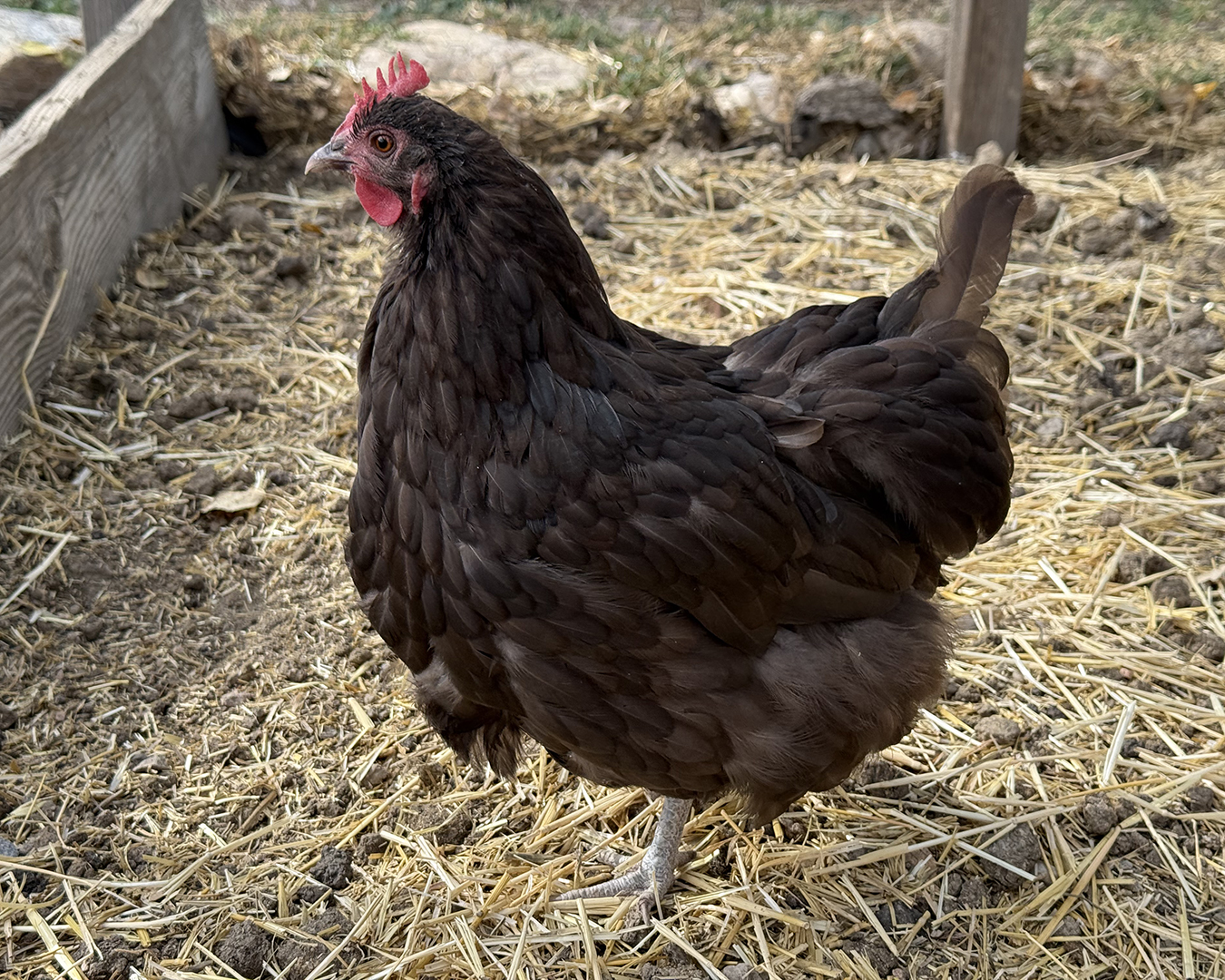
Eloise | Chocolate Orpington
Learn More
Eloise was three months old when purchased in 2024 and was named after the 1993 Paul MCartney and Wings song, Walking In The Park with Eloise. She is a sassy and broody girl, and is quite vocal when her eggs are collected from underneath her.
History and Interesting Facts:
The Orpington breed was developed in England in the 1880s by William Cook, but the Chocolate variety is much more recent and rare, created through careful selective breeding. These large, rounded birds are covered in soft, fluffy chocolate-brown feathers, giving them a cuddly, teddy-bear appearance. While not the heaviest egg producers, Chocolate Orpingtons provide around 150–200 light brown eggs each year. They are gentle, calm, and sweet-natured, often kept as pets as much as for their eggs. Known for their tendency to go broody, they also make excellent mothers. Because of their unusual coloring and pleasant personality, Chocolate Orpingtons are a popular choice for poultry shows and backyard enthusiasts alike.
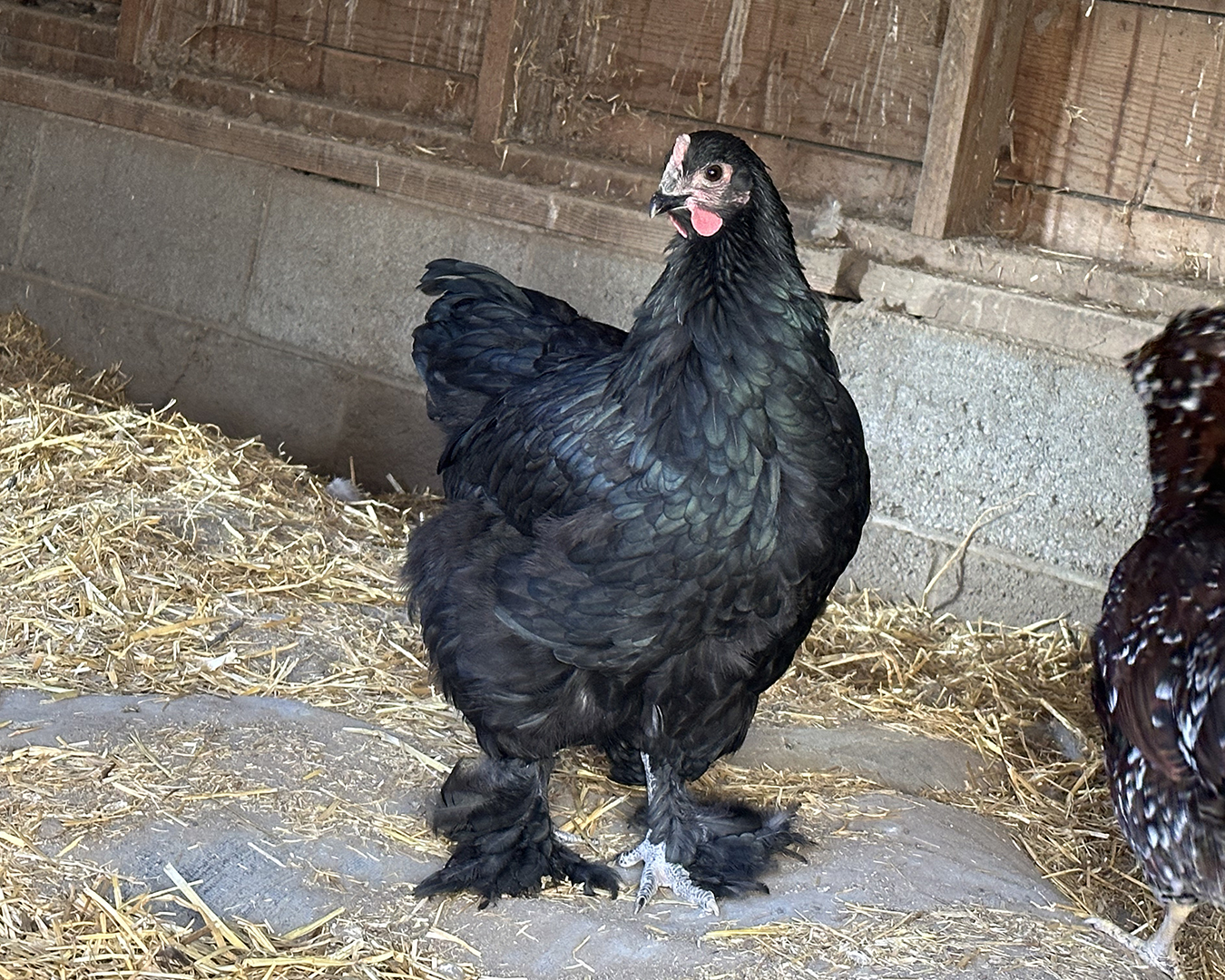
Elvira | Black Cochin
Learn More
Elvira was three months old when she was purchased in 2024. She was named after the 1981 song Elvira by the Oak Ridge Boys.
History and Interesting Facts:
Cochins originated in China and were introduced to the West in the mid-1800s, where they quickly became popular during Queen Victoria’s poultry craze. Black Cochins are known for their massive, fluffy appearance, with glossy black plumage that shimmers with a green tint and feathers that cover even their legs and feet. They are not prolific egg layers, averaging about 150–180 medium brown eggs per year, but they more than make up for it in personality and looks. These gentle giants are calm, friendly, and love human attention, often following our volunteers around the coop and run, ready for their treats of dried meal worms. Cochins frequently go broody and are excellent mothers, making them valuable for raising chicks. With their feathered feet and oversized fluff, they are often described as “walking feather balls” and are prized as ornamental birds.
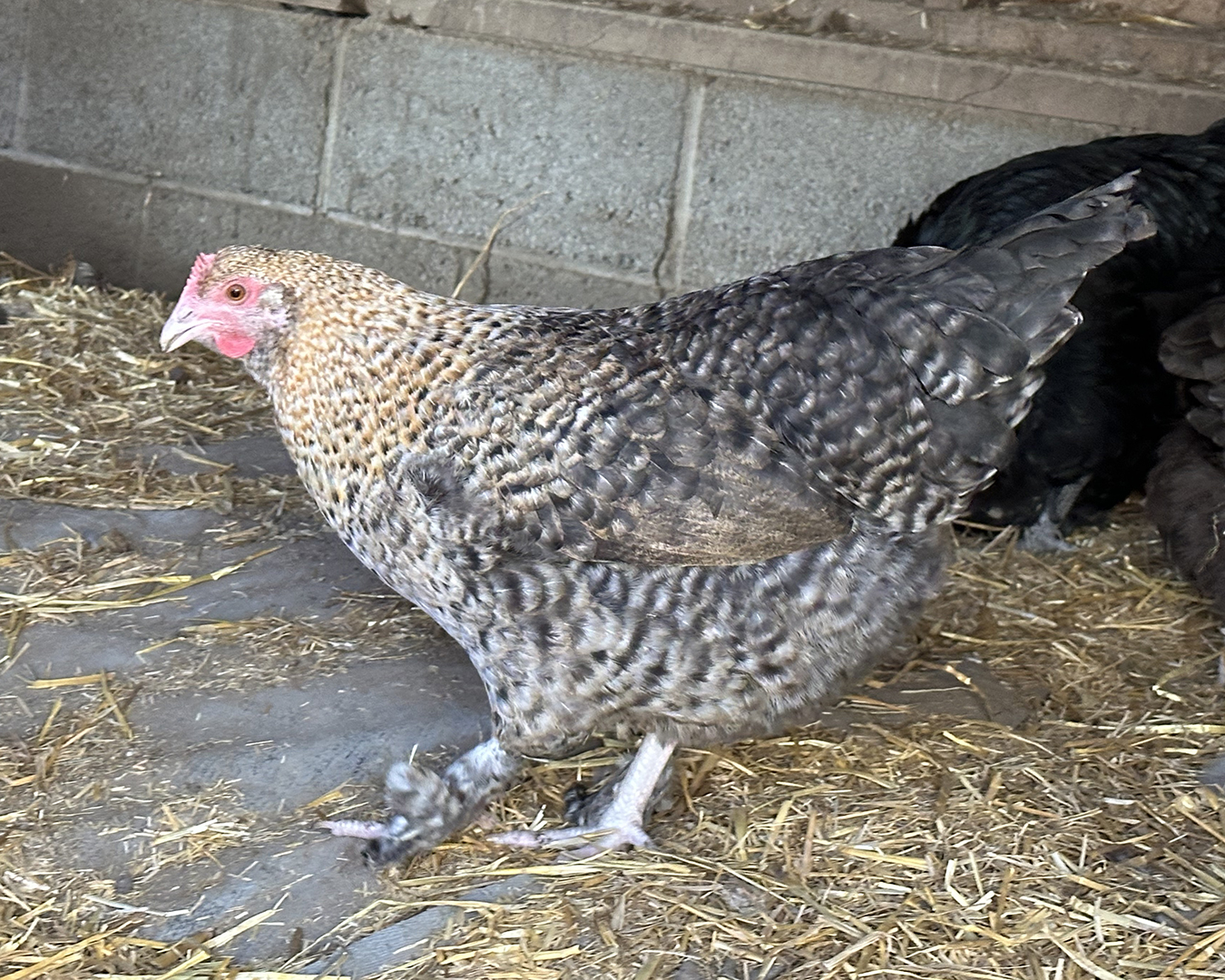
Gigi | Golden Maran
Learn More
Gigi joined our flock in 2024 when she was three months old and was named after the 1958 Vic Damone song, Gigi. The theme of the Best Picture musical by the same name
History and Interesting Facts:
The Marans breed originated in the port town of Marans, France, in the 1800s, and the Golden Cuckoo variety is one of the rarest and most attractive. These hens display golden hackles paired with barred, cuckoo-patterned plumage, giving them a striking, regal look. They are known for their highly desirable eggs, laying around 150–200 dark chocolate-brown eggs per year, sometimes with speckles. Golden Marans are quiet, gentle, and adaptable birds that thrive both in free-range environments and in confinement. Their eggs are so prized that even James Bond, in Ian Fleming’s novels, specified Marans eggs as his favorite breakfast. With their combination of beauty and utility, they are a true treasure in any flock.
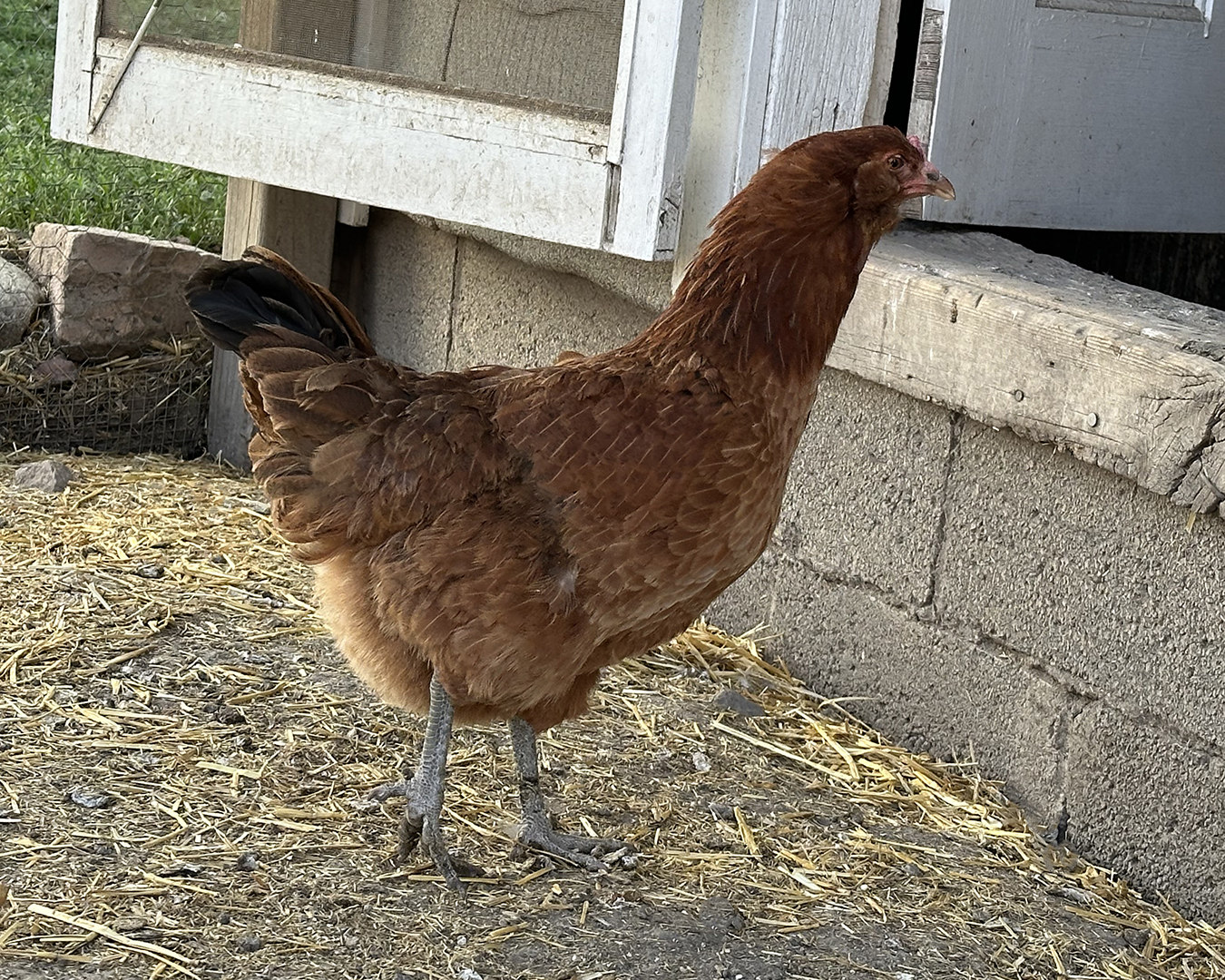
Lola | Easter Egger
Learn More
Lola joined was 2 years old and one of the oldest hens purchased in 2024. Her name comes from the 1974 Barry Manilow song, Copacabana (At The Copa).
History and Interesting Facts:
The Easter Egger is not a standardized breed but rather a hybrid chicken that carries the blue egg gene from Araucanas or Ameraucanas. They are named for their ability to produce colorful egg baskets, with each hen laying eggs in shades of blue, green, olive, or pink. No two Easter Eggers look alike, and their appearance can vary greatly—they may have beards, muffs, or clean faces, with feather colors ranging from white and black to brown or speckled. Easter Eggers are excellent layers, producing 200–280 medium to large eggs per year. They are also fun, friendly, and curious birds, often acting as the clowns of the flock. Their playful personalities and rainbow-colored eggs make them a favorite among backyard chicken keepers.
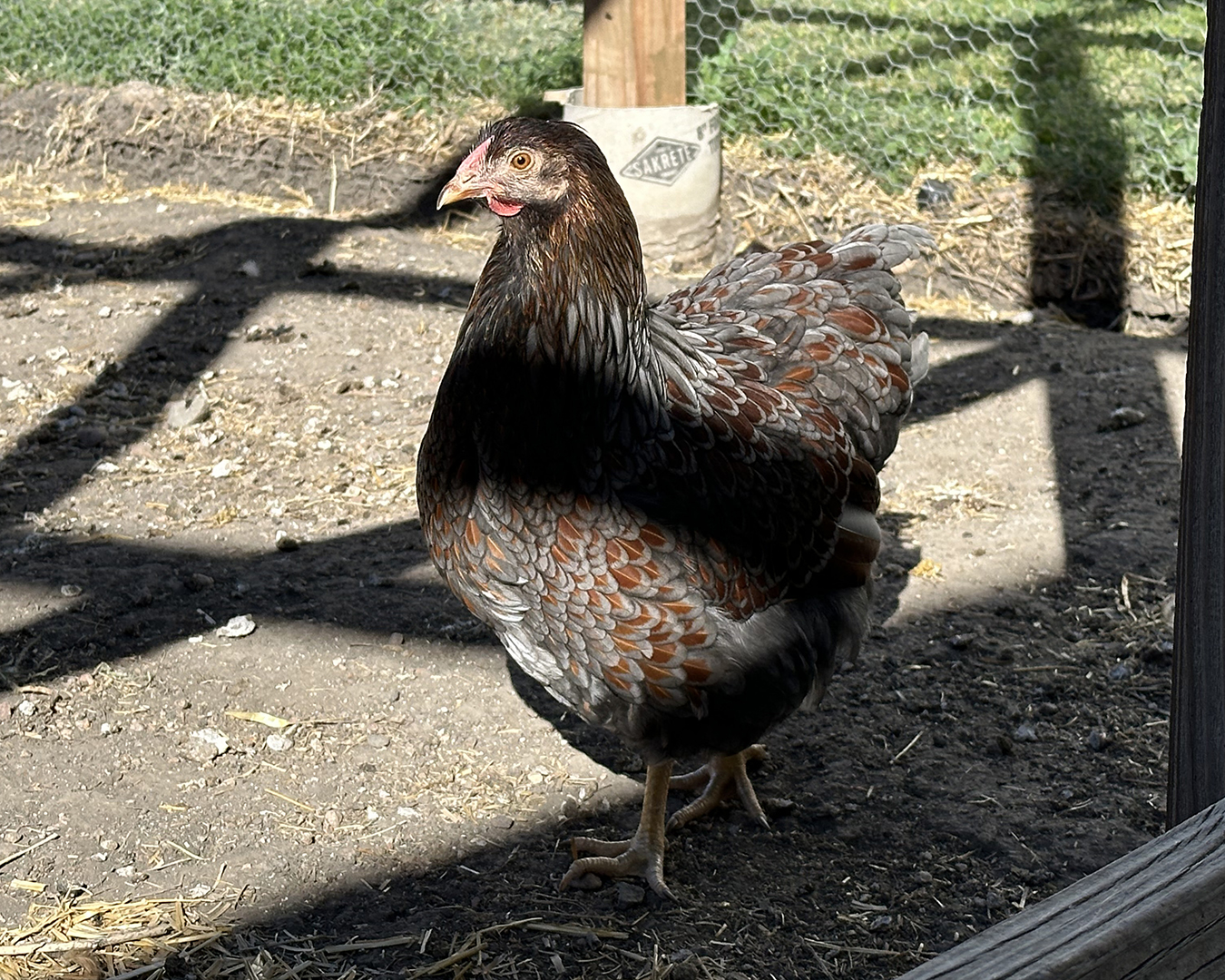
Maggie Mae | Blue Laced Red Wyandotte
Learn More
Maggie Mae was purchased in 2024 along with several other young hens when she was three months old. She is named after the 1970 Beatles song, Maggie Mae.
History and Interesting Facts:
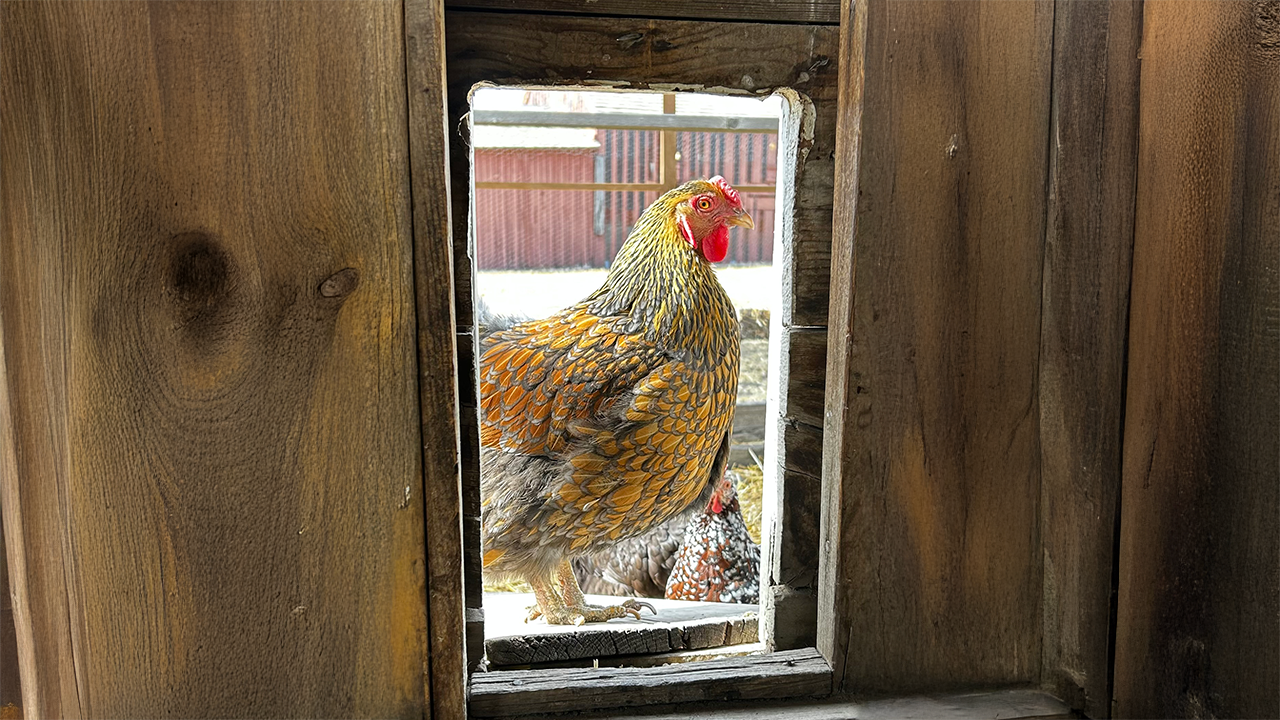
The Wyandotte was first developed in the United States in the 1870s as a hardy dual-purpose breed, but the Blue Laced Red color is a newer and especially striking variety. These hens have rich red feathers beautifully edged with a blue-gray lacing that gives them a jewel-like appearance. With their compact, rounded bodies and small rose combs, they are as functional as they are beautiful. Blue Laced Red Wyandottes are dependable layers, producing 180–250 light brown eggs annually, and their rose comb makes them particularly well-suited for cold climates since it resists frostbite. Calm, friendly, and sociable, they are excellent choices for both free-range and backyard flocks, combining utility with ornamental appeal.
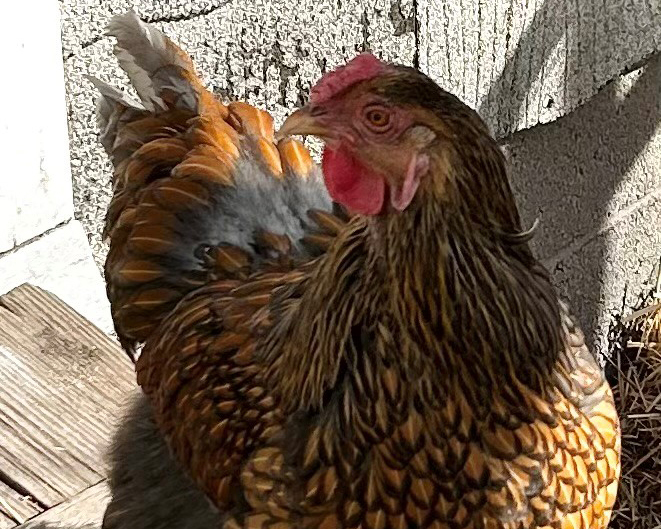
Molly | Blue Laced Gold Wyandotte
Learn More
Molly joined the Schweiger brood in 2024 and was one of the variety of hens purchased at three months old. Her name comes from the 1968 Beatles song, Ob-La-Di, Ob-La-Da.
History and Interesting Facts:
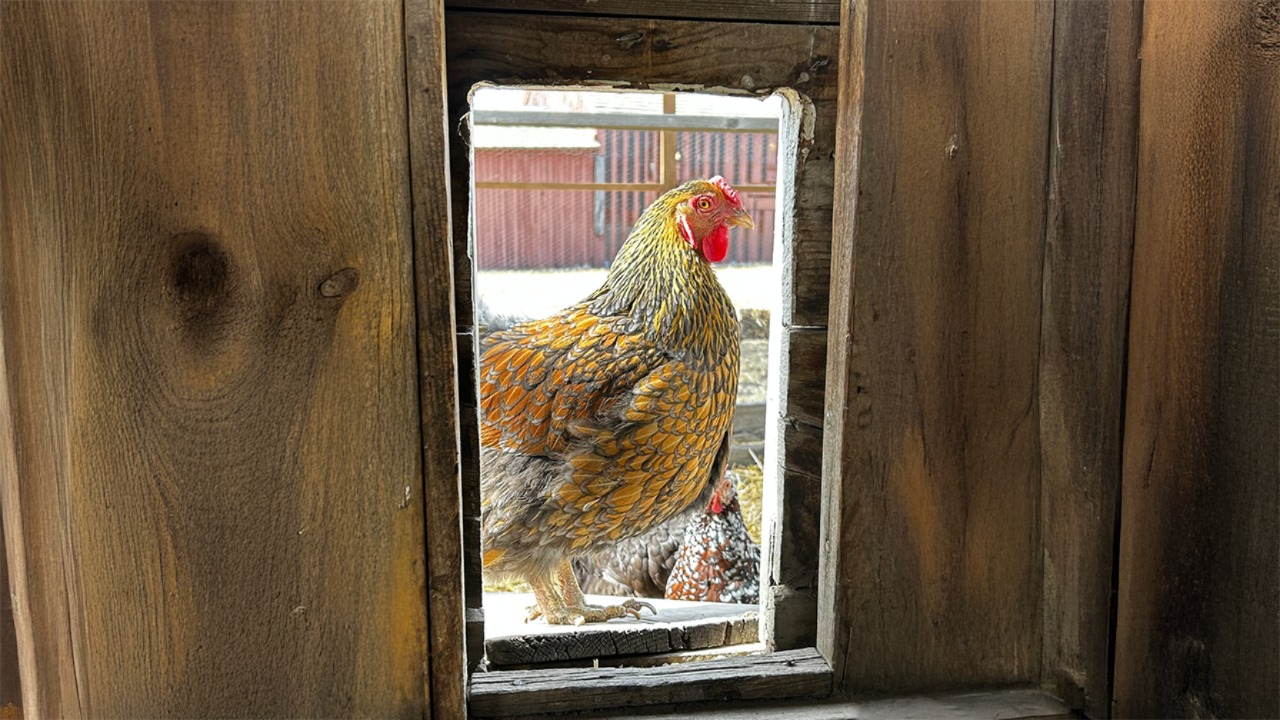
The Blue Laced Gold Wyandotte is a rare and eye-catching variety of the Wyandotte breed, originally developed in the United States in the late 1800s as a hardy dual-purpose chicken. Unlike the more common Silver or Golden varieties, the Blue Laced Gold is prized for its brilliant golden feathers edged with striking blue-gray lacing that creates a truly ornamental appearance. They are medium to large birds with a compact, rounded shape and a small rose comb, which helps protect them from frostbite in cold weather. Blue Laced Gold Wyandottes are dependable layers, producing around 180–250 light brown eggs per year, and they are equally valued for their calm and friendly temperament. Adaptable to both confinement and free-range living, they are excellent choices for backyard flocks where both beauty and productivity are desired. Because they are still relatively uncommon, these hens are especially sought after by hobbyists and breeders looking to add a unique splash of color to their flocks.
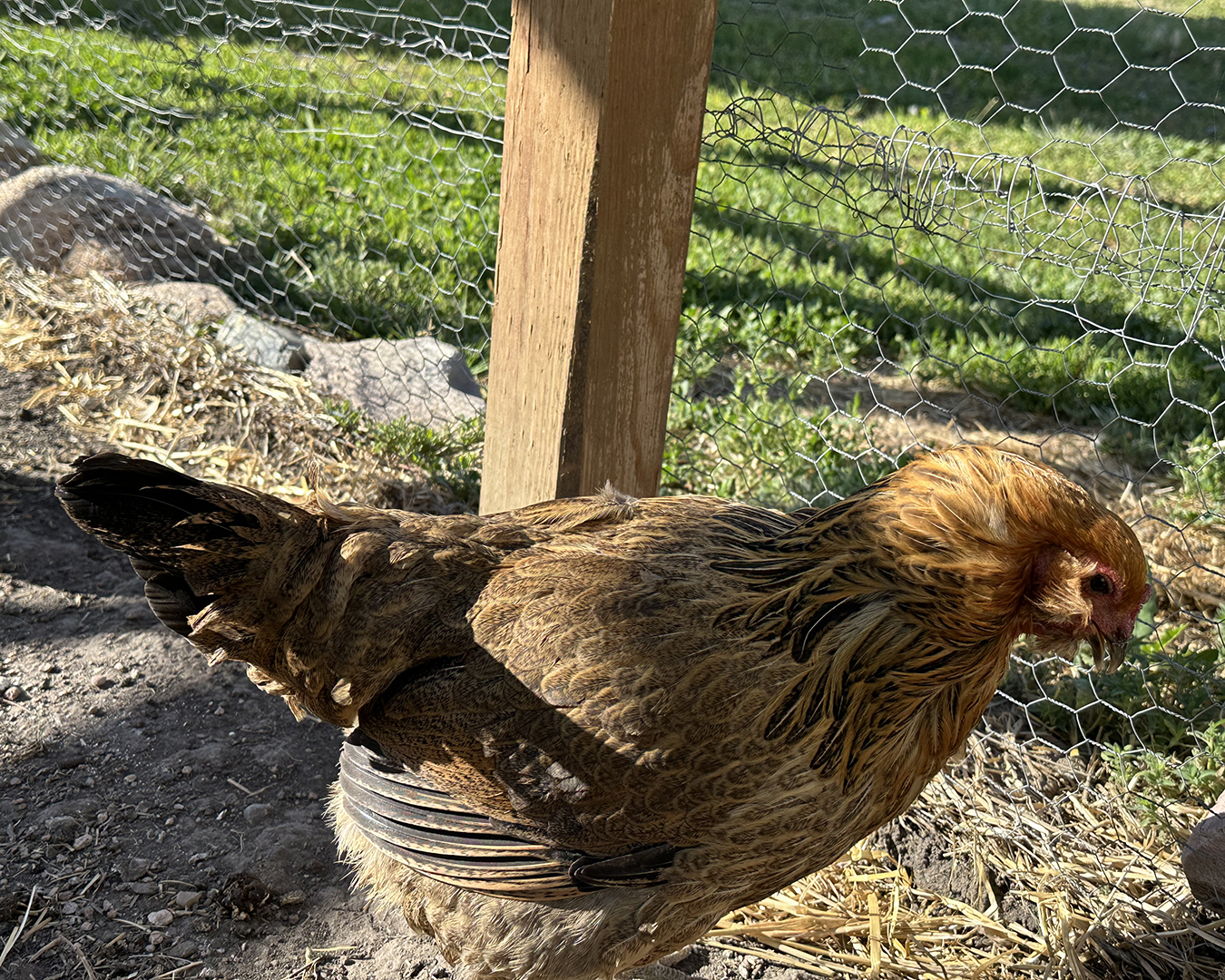
Mylie | Americauna
Learn More
Mylie is one of Schweiger Ranch’s OGs, joining the brood in 2019, and is named after the songstress, Mylie Cyrus.
History and Interesting Facts:
The Ameraucana was developed in the United States in the 1970s from Araucanas, with the goal of preserving the unique blue egg trait while avoiding the genetic issues found in the Araucana breed. Recognized by their signature muffs, beard, and pea comb, Ameraucanas come in several colors including black, blue, silver, and wheaten. They are steady layers, producing 180–220 eggs per year, and unlike Easter Eggers, Ameraucanas always lay true blue eggs. Slightly shy compared to other breeds, they are alert, curious, and friendly when handled regularly. Ameraucanas are prized for their unusual appearance, cold hardiness, and the unmistakable beauty of their sky-blue eggs.
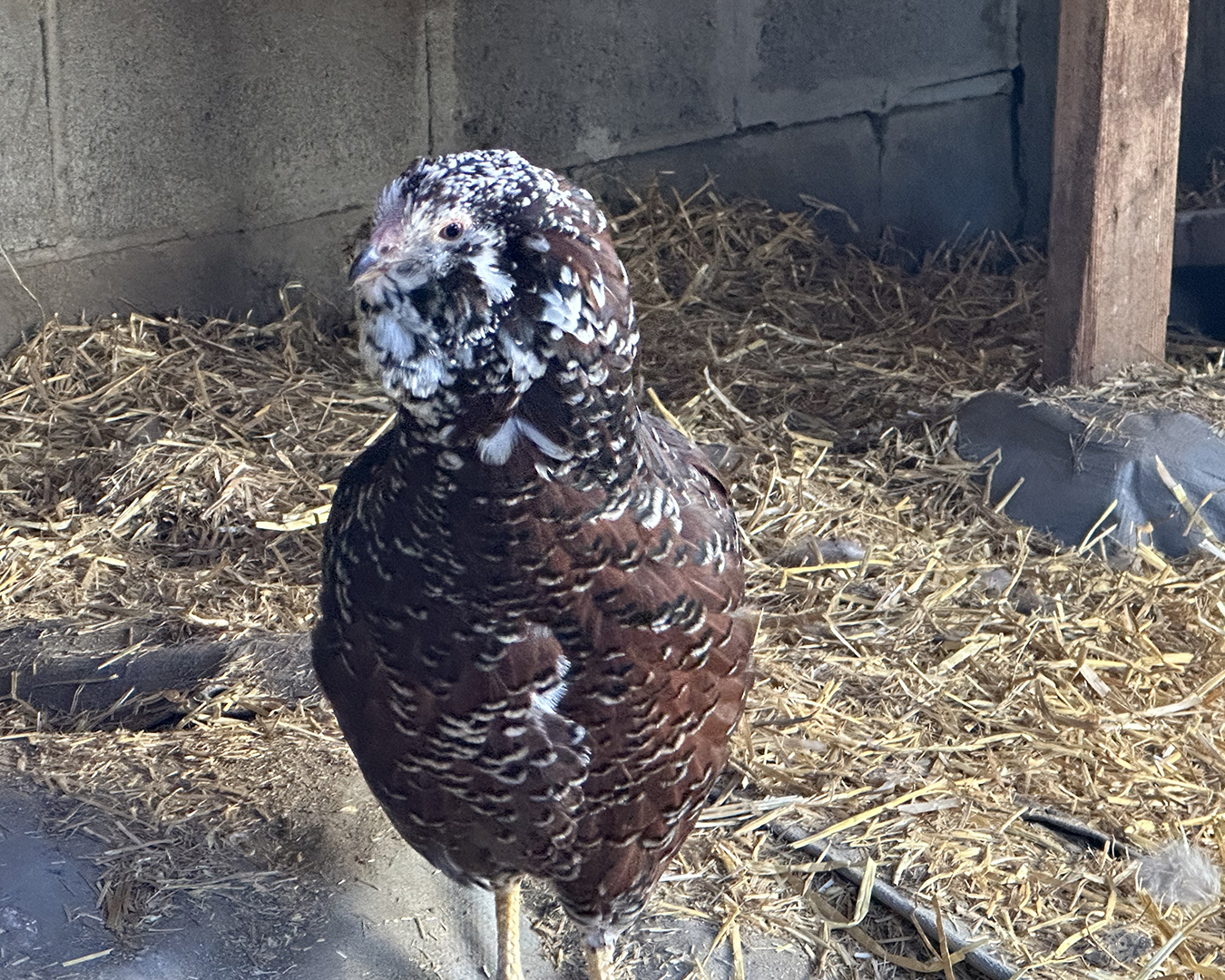
Oleta | Russian Orloff
Learn More
Oleta was named after the 2003 song, Moving Oleta, by Reba McEntire. She was three months old when she made Schweiger Ranch her home.
History and Interesting Facts:
The Russian Orloff is a rare and unusual breed with origins in Russia dating back to the 1600s. Influenced by Persian and Malay chickens, the breed was promoted in the 1800s by Count Orlov, a Russian nobleman, and eventually took his name. These tall, upright birds are easily recognized by their beards, muffs, and walnut combs, as well as their rich mahogany plumage often mottled with white or black. Russian Orloffs are moderate layers, producing about 100–150 light brown eggs per year, but they are valued more for their heritage and hardiness than their productivity. Independent and sometimes aloof, they thrive in colder climates and are admired by poultry enthusiasts for their rarity and striking appearance.
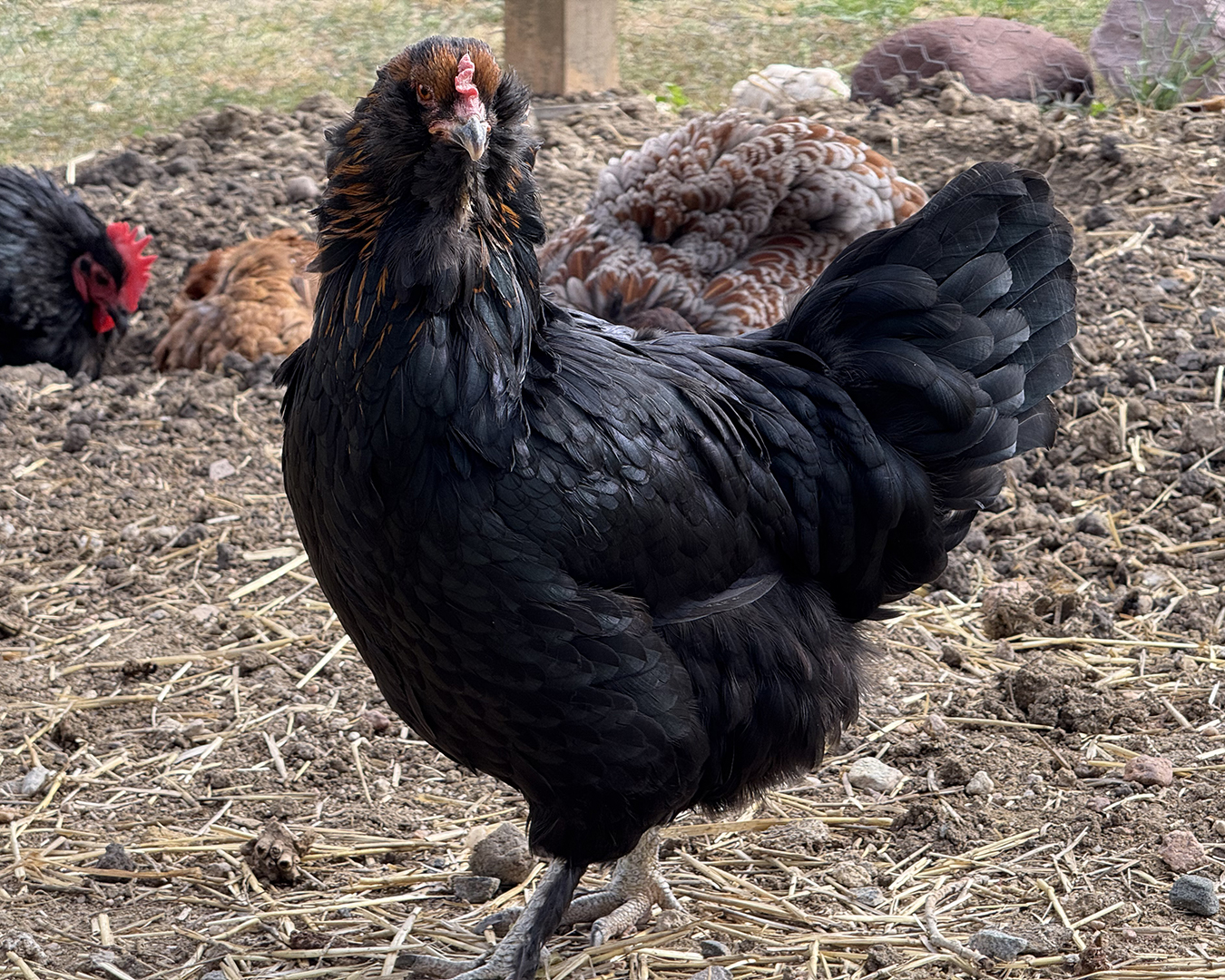
Ophelia | Olive Egger
Learn More
Ophelia joined the Schweiger brood in 2024 at the age of 1 year and was named after the 2016 song, Ophelia by the Lumineers.
History and Interesting Facts:
Olive Eggers are not a true breed but a hybrid, created by crossing a dark brown egg layer such as a Marans with a blue egg layer like an Ameraucana. The result is a hen that lays beautiful olive-green eggs, with shades ranging from soft sage to mossy green. Their appearance varies widely depending on their parent breeds, and they may inherit features such as muffs, beards, or feather patterns from either side. Olive Eggers are prolific, laying 180–250 eggs each year, and are typically hardy, active, and friendly birds. Their unique egg color makes them especially desirable for keepers who want a colorful and diverse egg basket.
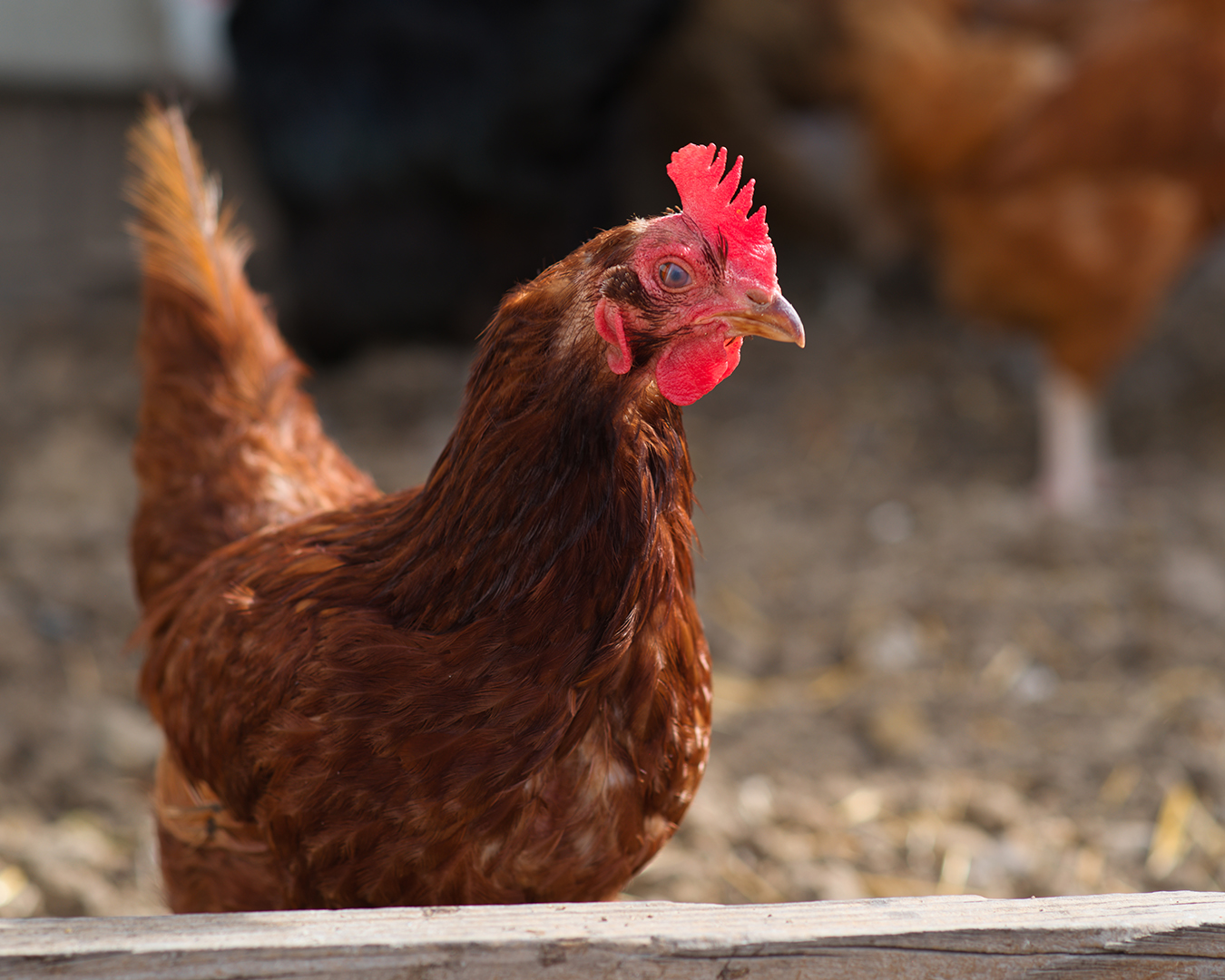
Rosie | Rhode Island Red
Learn More
Rosie is one of two Rhode Island Reds that call Schweiger Ranch home. She was purchased in 2024 when she was one year old and is named after the 1970 song by Neil Diamond, Cracklin’ Rosie.
History and Interesting Facts:
Developed in Rhode Island and Massachusetts in the 1800s, the Rhode Island Red is one of the most successful and enduring American chicken breeds. Created as a hardy dual-purpose bird, it became a cornerstone of both backyard flocks and commercial laying operations. Rhode Island Reds are strong, confident chickens with deep red plumage and single combs. They are exceptional egg layers, producing 250–300 large brown eggs per year, and are known for their resilience in a wide range of climates. While generally friendly, they can be more assertive and dominant than docile breeds, making them natural leaders in the flock. As the official state bird of Rhode Island, this breed holds a proud place in poultry history.
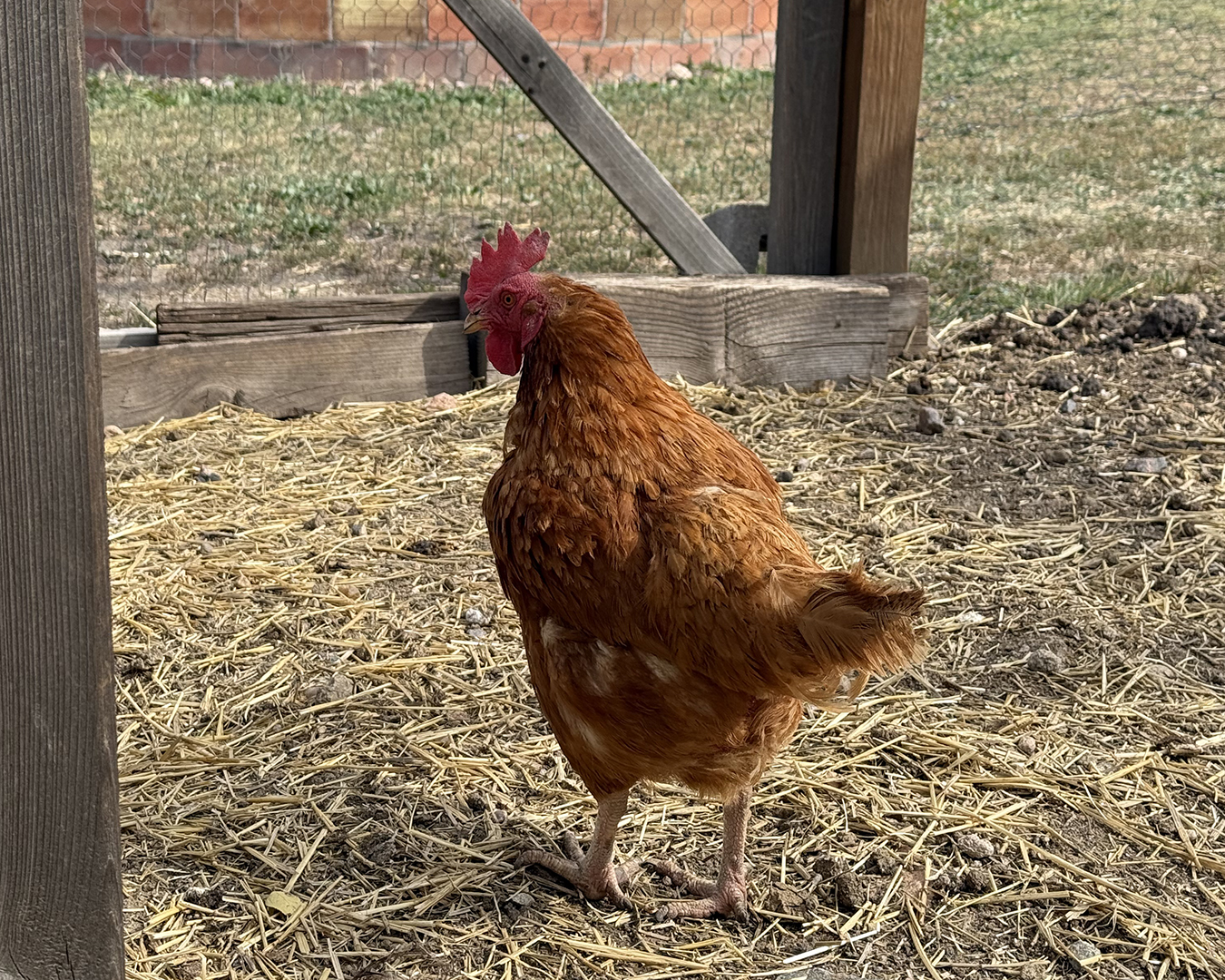
Ruby | Rhode Island Red
Learn More
Ruby, our other Rhode Island Red, was purchased in 2023 at six months old. She is lighter in color than Rosie, and is named after the 1960 Ray Charles song, Ruby.
History and Interesting Facts:
Rhode Island Reds are incredibly resilient and can adapt to a wide range of environments. Unlike some heritage breeds that struggle in harsher conditions, Rhode Island Reds handle both hot summers and chilly winters with relative ease. Their strong immune systems and hardiness made them a foundation breed for many modern commercial hybrids.
Rhode Island Reds have a confident, sometimes sassy personality. While friendly, they are more assertive than Orpingtons or Sussex, and they often climb to the top of the flock’s pecking order. Some keepers affectionately describe them as “boss hens” because of their no-nonsense attitude, but they still enjoy human interaction and can become quite tame with regular handling.
Finally, Rhode Island Reds are part of American culture. They were declared the state bird of Rhode Island in 1954, and in Little Compton, a monument honors the breed’s contribution to farming. Owning these hens means keeping a small piece of poultry history alive in your own backyard.
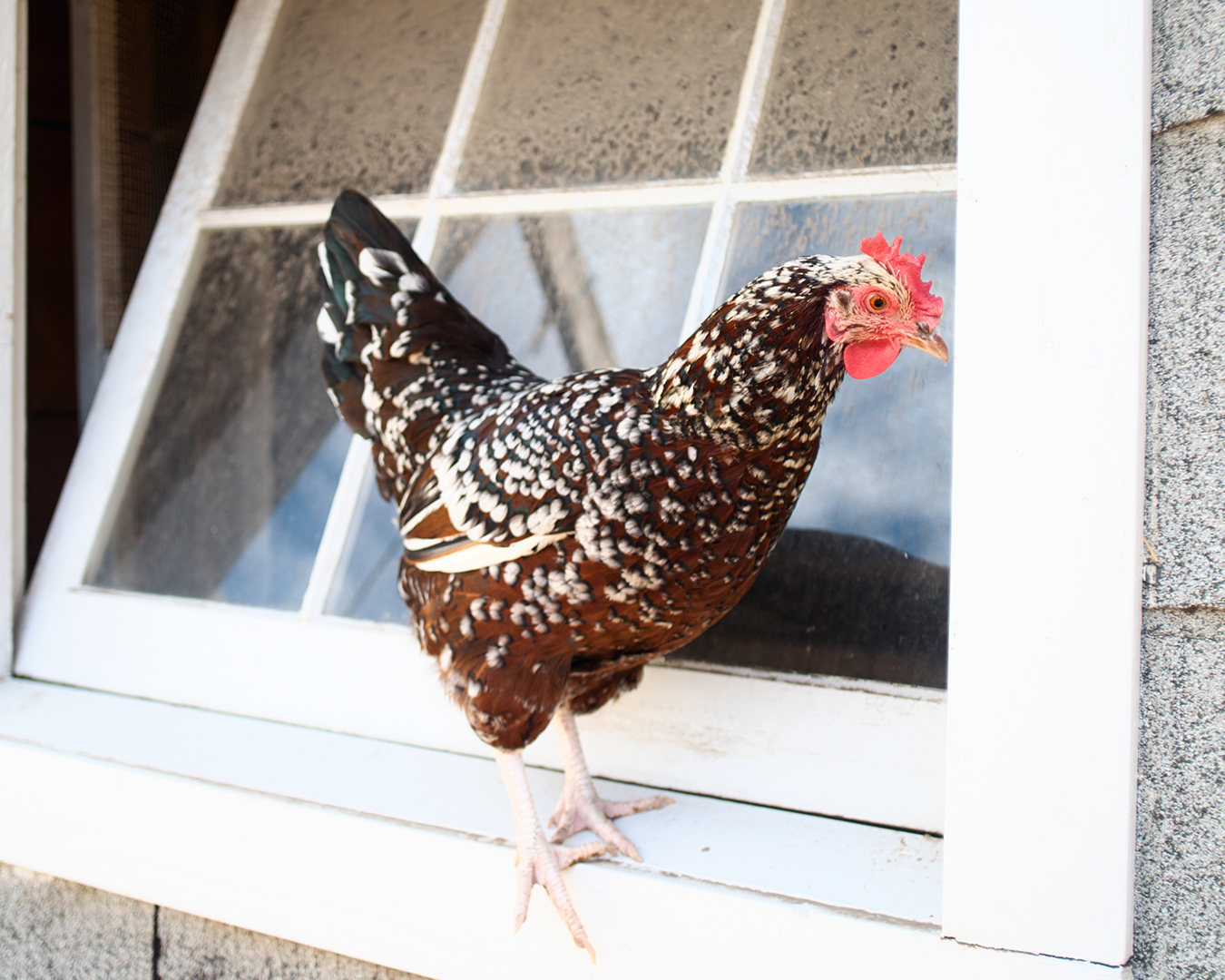
Sherrie | Speckled Sussex
Learn More
Sherrie was one year old when purchased in 2024, and is named after the 1984 Journey song, Oh Sherrie.
History and Interesting Facts:
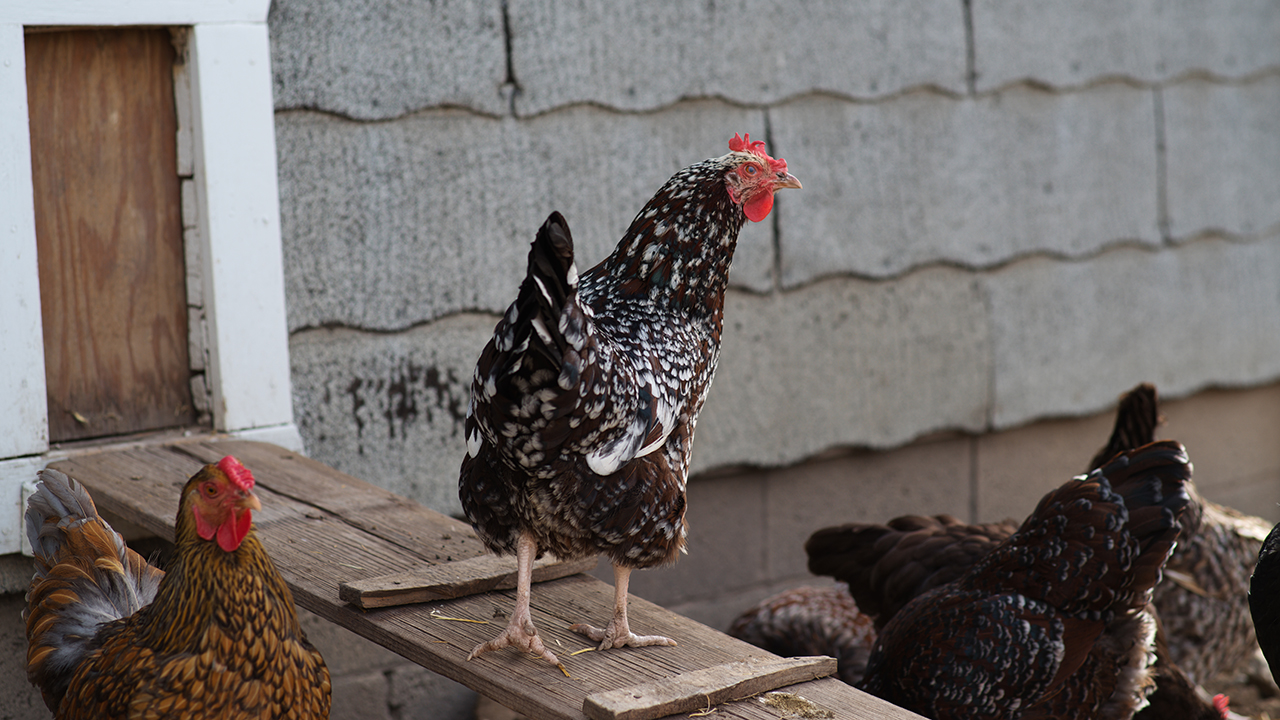
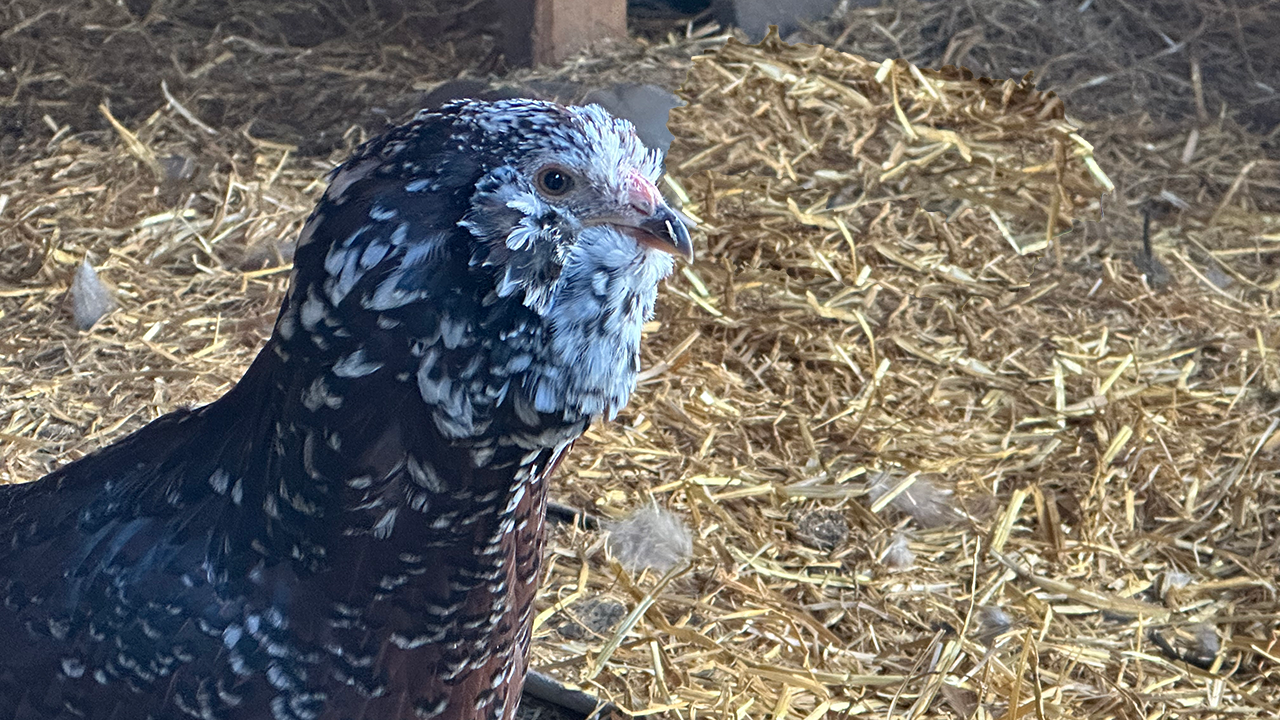
The Speckled Sussex is one of England’s oldest chicken breeds, with roots tracing back to Roman times in the Sussex region. Their deep mahogany plumage is sprinkled with white speckles that increase with age and molting, making them even more beautiful as they mature. Speckled Sussex hens are steady layers, producing 200–250 large cream to light brown eggs each year. Known for their curiosity and friendliness, they often follow their keepers around and enjoy being part of daily activities. Their talkative nature and charming personality make them excellent backyard companions, and many keepers consider them the “pets” of the flock.
Chicken Gallery